



Cement-based products offer excellent compressive strength and durability, but they are naturally rigid. When exposed to temperature changes, vibration, substrate movement or drying shrinkage, an unmodified cementitious layer may develop cracks or lose adhesion.
VAE emulsion can be used as a polymer modifier to improve the flexibility and bonding performance of certain cement-based formulations. However, the results depend on the VAE grade, polymer dosage, cement system, fillers, additives and curing conditions.
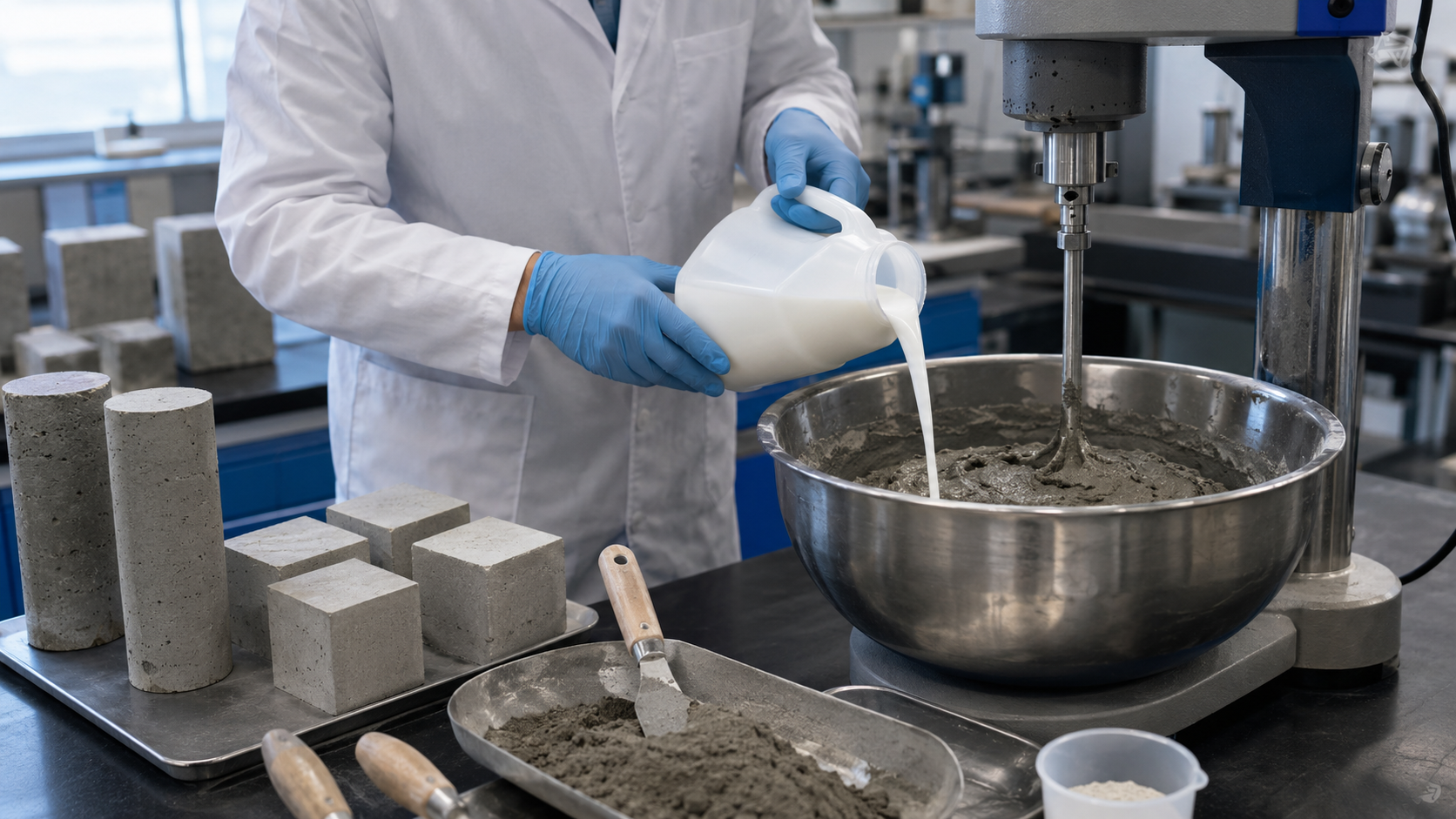
Why Cement-Based Materials Tend to Crack
As cement hydrates and the material dries, internal stress can develop. Because the hardened cement matrix has limited ability to accommodate movement, this stress may result in cracking.
The risk can become greater when the product is applied in a thin layer, bonded to a moving substrate or exposed to repeated temperature and moisture changes. Rigid cement mortar may also have difficulty maintaining adhesion to smooth or low-porosity surfaces.
VAE emulsion does not replace cement hydration. Instead, it introduces a flexible polymer phase into the mineral structure.
Formation of a Flexible Polymer Network
VAE emulsion contains polymer particles dispersed in water. During drying and curing, these particles move closer together and form a continuous or partially continuous polymer film within the cement matrix.
This film connects mineral particles and fills some of the spaces between cement hydration products. Compared with an unmodified system, the resulting structure is generally better able to absorb stress and accommodate small movements without immediate cracking.
The ethylene component of the VAE copolymer contributes internal flexibility. Depending on the polymer composition, the formulation may require less external plasticization to achieve the desired balance between flexibility and strength.
Improved Deformation and Crack Resistance
A polymer-modified cementitious layer can distribute stress more effectively than a highly rigid, unmodified layer. When the substrate expands, contracts or vibrates, the polymer phase helps the material tolerate limited deformation.
This does not make the product completely crack-proof. Large structural movement, incorrect joint design or poor substrate preparation can still cause failure. VAE modification is most useful for managing smaller stresses associated with shrinkage, temperature variation and normal service conditions.
This property can benefit products such as flexible cementitious coatings, repair mortars, skim coats, tile-related materials and other thin-layer construction products.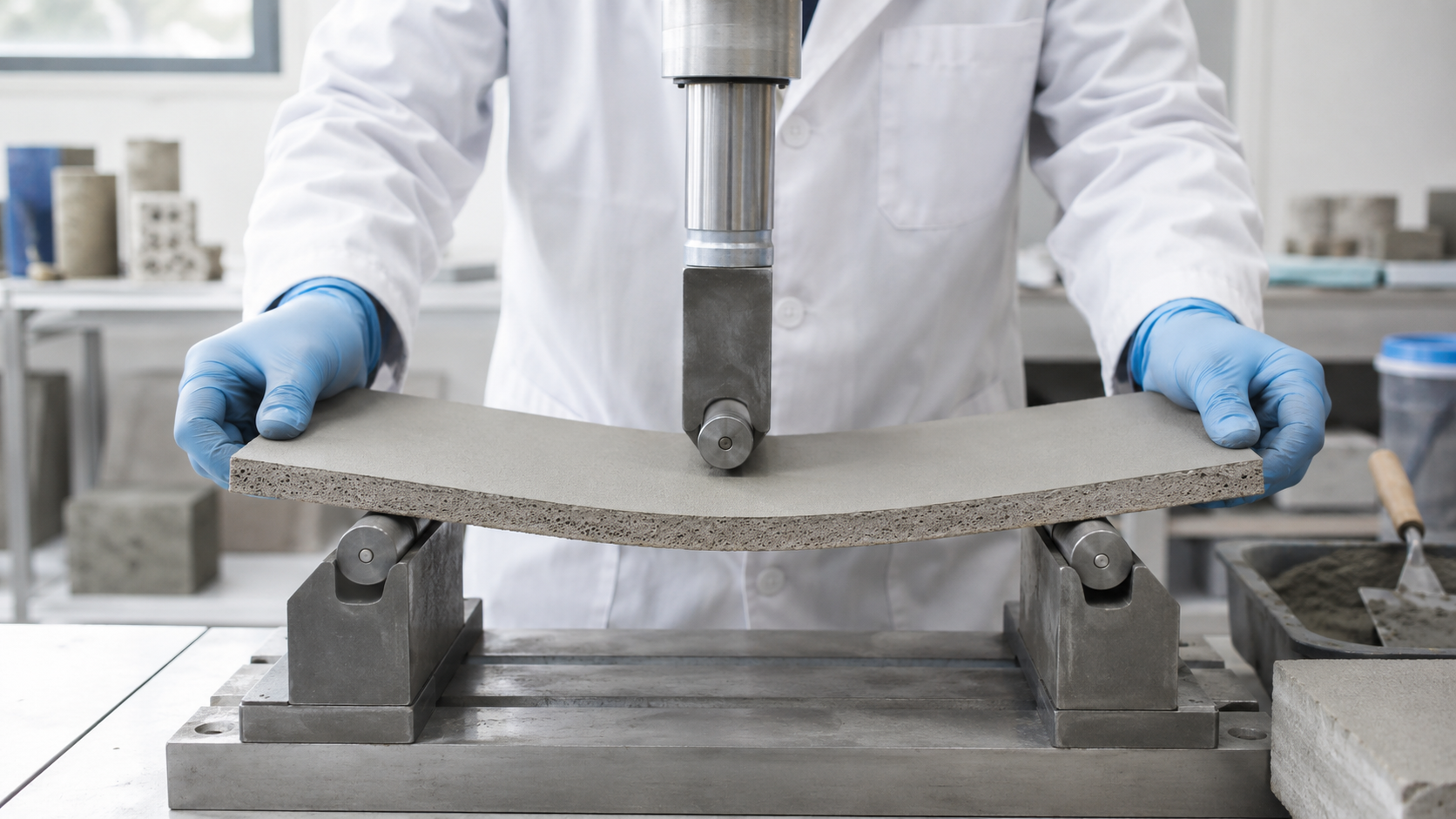
Better Adhesion at the Interface
Flexibility and adhesion are closely connected. A brittle material may separate from the substrate when movement creates stress at the bonding interface.
The polymer film formed by VAE emulsion can improve contact between the cementitious product and substrates such as concrete, masonry and selected building boards. Better interfacial adhesion helps the applied layer remain attached while accommodating limited movement.
Actual adhesion depends on surface cleanliness, porosity, moisture, application thickness and curing conditions. Compatibility with the intended substrate should therefore be confirmed through testing.
Factors That Determine the Final Performance
Adding more VAE emulsion does not automatically produce a better cement-based product. Excess polymer or water may change viscosity, setting behavior, compressive strength and curing performance.
Formulators should evaluate:
- The polymer-to-cement ratio
- VAE glass transition temperature and film-forming behavior
- Cement and filler compatibility
- Water-to-cement ratio
- Thickener, defoamer and other additives
- Application temperature and humidity
- Required flexibility, adhesion and water resistance
Laboratory testing should compare both modified and unmodified samples. Useful evaluations may include tensile adhesion, bending or deformation, crack-bridging behavior, water absorption and performance after wet–dry or temperature cycles.
Conclusion
VAE emulsion improves flexibility in cement-based products by forming a polymer network within the hardened mineral matrix. This network helps distribute stress, support adhesion and reduce brittle failure under limited movement.
The degree of improvement depends on the complete formulation rather than the presence of VAE alone. Selecting an appropriate grade and polymer dosage requires consideration of the substrate, application method, curing environment and final performance requirements.
Post time: Aug-28-2026