



An aluminum honeycomb panel is a bonded structure rather than a single material. Its rigidity and stability depend on the interaction between the face sheets, honeycomb core, adhesive layer and production process.
Two-component polyurethane adhesive can be used to bond aluminum honeycomb cores to metal skins and to manufacture other sheet-based composite panels. Selecting the product requires careful review of the substrate, coating method, assembly window and pressing process.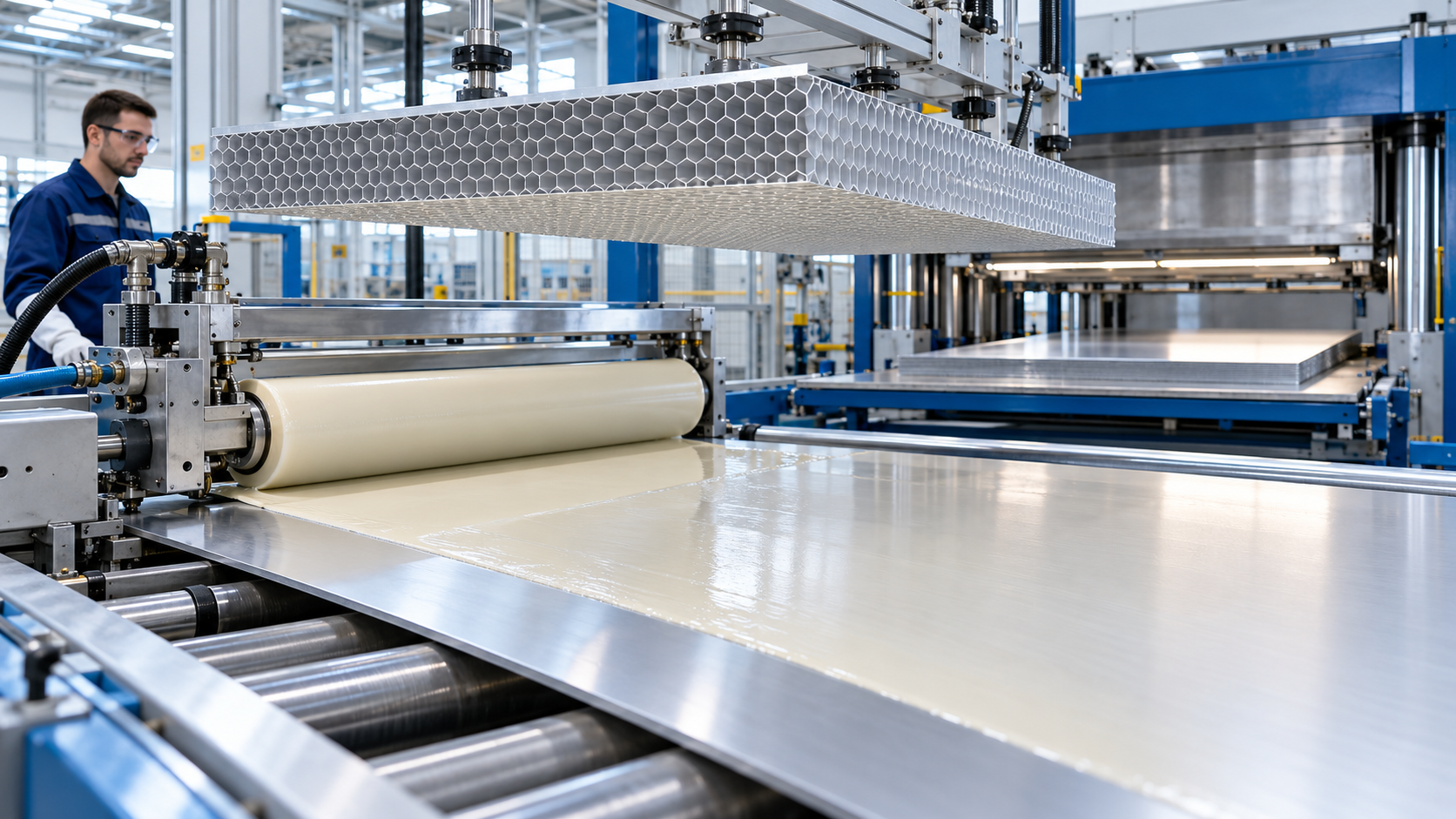
Desay Chemical’s website includes a two-component polyurethane sheet-composite adhesive for aluminum honeycomb, stainless-steel, metal and wood panels. The product is supplied as separate components that are mixed before application.
Define the Complete Panel Construction
“Aluminum panel” is not a sufficient substrate description. Buyers should specify every layer, including:
- Face-sheet material and thickness
- Bare, anodized, painted or coated metal surface
- Honeycomb material and cell size
- Core thickness
- Panel length and width
- Single- or double-skin construction
- Edge frame or reinforcing components
- Intended indoor or outdoor use
Surface coatings can influence both adhesion and curing. Material samples should therefore represent the actual production sheets rather than uncoated laboratory aluminum.
If the adhesive will also be used for steel, wood or another core material, each construction should be evaluated separately.
Check Surface Cleanliness and Flatness
Metal surfaces may carry rolling oil, protective-film residue, dust or fingerprints. Honeycomb cores can also collect debris during cutting and handling.
Establish a repeatable preparation process that is compatible with the metal finish. After cleaning, protect the prepared surfaces from renewed contamination.
The face sheets, core and press table should be sufficiently flat for uniform contact. Adhesive cannot reliably bridge major variations in core height or damaged panel components.
Before production begins, assemble a dry panel without adhesive. This can reveal alignment, flatness or fixture problems that should not be attributed to the glue.
Match Mixing Capacity to Production Output
Once the two components are mixed, the adhesive has a limited usable period. The batch size must match the area that the factory can coat, assemble and place under pressure within that period.
During a line trial, record:
- Component ratio
- Mixing method and duration
- Adhesive temperature
- Time between mixing and coating
- Coating weight
- Time between coating and panel assembly
- Time the panel enters the press
- Quantity remaining after the batch
Desay’s product page lists multiple mix-ratio options and an opening-time reference. These details should be verified for the exact supplied formulation; different versions must not be treated as interchangeable.
Apply a Uniform Adhesive Layer
For sandwich panels, consistent coverage is generally more useful than a heavy, uneven coating. Missing areas can leave the face sheet unsupported, while excessive application adds weight and may create squeeze-out or surface irregularities.
Roller coating can provide controlled distribution across large sheets when the adhesive viscosity and equipment settings are compatible. Buyers should discuss coating width, roller gap, line speed and target application weight with the supplier.
Inspect the coated sheet under suitable lighting before the core is placed. Pay particular attention to edges, corners and any area where the coating pattern changes.
Control Layup and Pressing
Position the honeycomb core without dragging it excessively through the adhesive layer. Add the second skin and any framing components according to the approved layup sequence.
The press must provide sufficiently uniform contact across the panel. Local high spots, damaged honeycomb or uneven platens may produce areas with insufficient bonding even when the adhesive is suitable.
Pressing time and pressure depend on the adhesive grade, panel construction and factory temperature. Use the current technical instructions and validated trial results rather than applying settings copied from another polyurethane product.
Inspect More Than the Panel Surface
A panel can look flat while containing poorly bonded areas. Quality evaluation should include both visual inspection and agreed finished-panel testing.
Check representative samples for:
- Skin-to-core contact
- Unbonded or hollow areas
- Edge lifting
- Panel bowing
- Adhesive accumulation
- Core crushing
- Bond failure after cutting or edge finishing
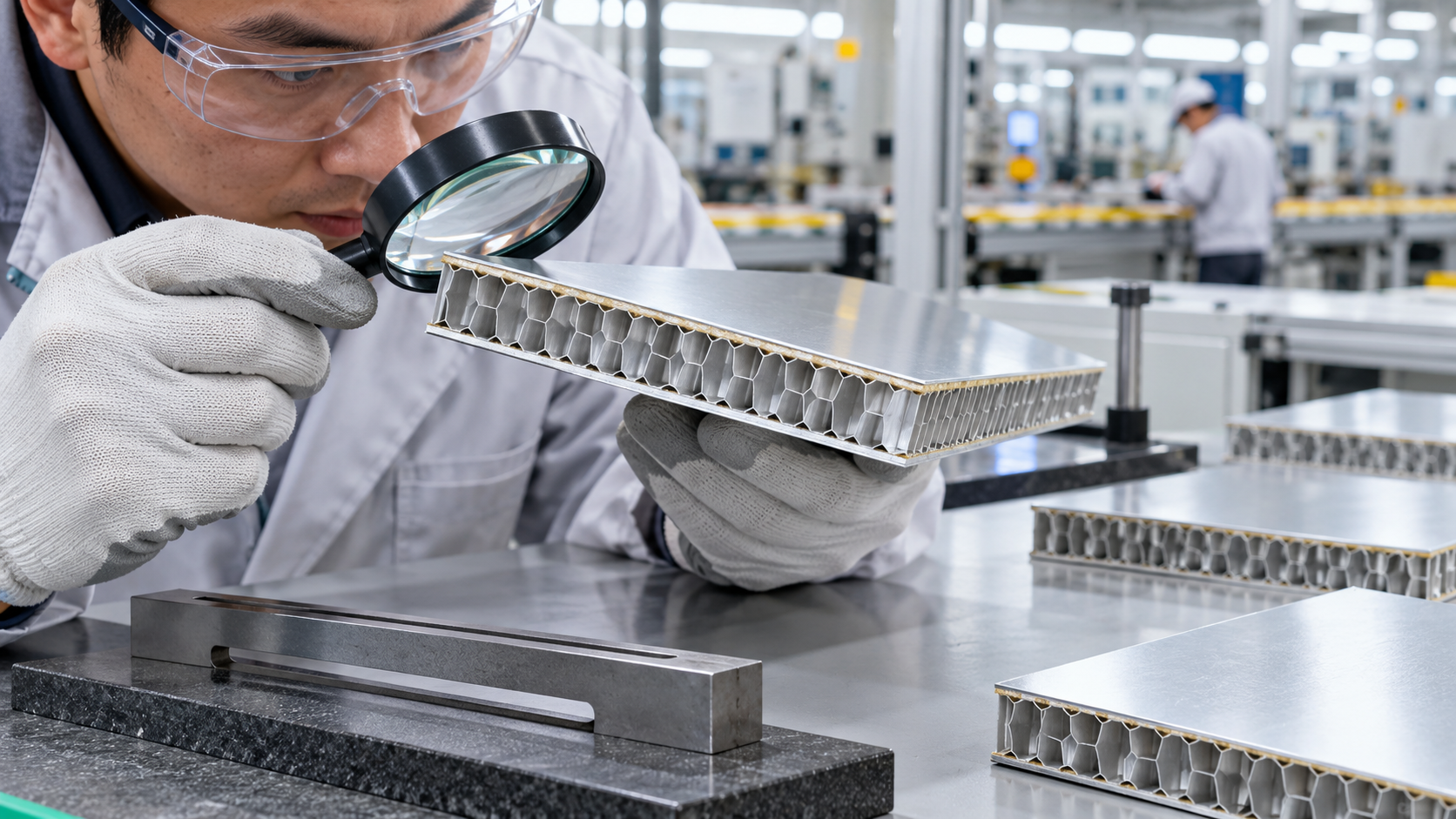
Cut samples can help reveal adhesive distribution at the skin-to-core interface. If panels are intended for doors, partitions, construction or another regulated application, the responsible manufacturer must establish the relevant fire, structural, aging and environmental test requirements. Such properties must not be assumed from the adhesive name alone.
Send Desay Chemical the panel drawing, metal finish, core specification, coating equipment, target output, press conditions and required test standards. Specific strength data, mix ratio, working time, coverage, cure schedule and compliance documentation should be confirmed for the proposed grade before commercial production.
Post time: Oct-08-2026