



Resin-bound paving combines decorative mineral aggregate with a liquid binder to create a continuous surface for paths, patios, landscaped areas and other pedestrian applications. The performance of the finished system depends on much more than the resin alone.
Aggregate cleanliness, moisture, mixing accuracy, base preparation, installation thickness and curing conditions all affect the final result. For this reason, procurement teams should evaluate the binder as part of a complete paving system.
Desay Chemical lists a two-component stone adhesive in its construction-material range for color-stone and resin-bound surface applications. Its product page references polyurethane and epoxy resin chemistry, but buyers should confirm the precise chemistry, component ratio and recommended use for the proposed grade before ordering.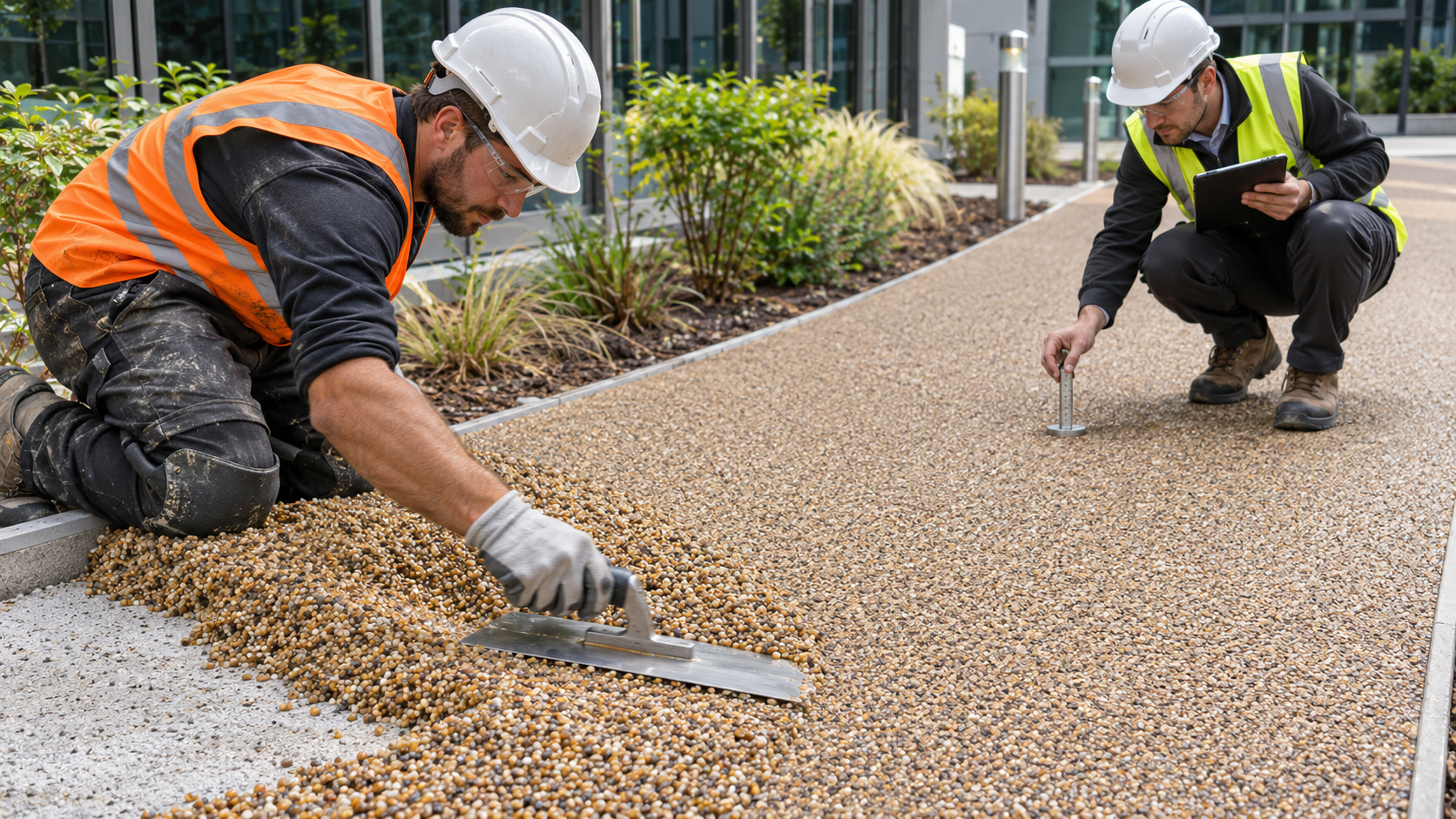
Define the Intended Surface
Begin by identifying where the resin-bound aggregate will be installed:
- Pedestrian path or landscaped walkway
- Patio or courtyard
- Pool surround
- Commercial public space
- Decorative indoor area
- Light-traffic or vehicle-access surface
- New base or refurbishment project
- Indoor or outdoor exposure
The required binder and system design can change with traffic, drainage, climate and base construction. A decorative garden path should not automatically use the same specification as a driveway.
Any structural or public-safety requirement should be reviewed by the project designer.
Select and Test the Aggregate
The stone should be graded appropriately for the intended surface and free from dust, clay and other contamination. Moisture is particularly important because it can interfere with mixing, coating and cure.
Aggregate suppliers should provide consistent particle size and color across production batches. Before approving the resin, obtain representative stones from the actual commercial supply.
Test:
- Particle-size distribution
- Aggregate shape
- Dust content
- Moisture condition
- Bulk density
- Color consistency
- Binder coverage
- Finished surface texture
Do not determine the mixing ratio by appearance alone.
Confirm the Resin Chemistry
Stone binders may be based on polyurethane, epoxy or another reactive resin system. Each chemistry has different processing and end-use considerations.
Desay’s product page lists both polyurethane and epoxy within its stone-adhesive range. Buyers must establish which specific formulation is being quoted. The resin type, component ratio, working time, curing schedule and exposure limitations should appear in the current technical documentation.
If color stability or outdoor weathering is important, request the relevant test data for the exact grade. Do not assume that every clear binder provides the same resistance to yellowing or ultraviolet exposure.
Control Component Measurement and Mixing
A two-component binder depends on accurate proportioning. Guessing the ratio or measuring by volume when the instructions specify weight can lead to incomplete cure or inconsistent properties.
Use calibrated scales and a repeatable mixing procedure. Resin components should be mixed thoroughly before aggregate is added, unless the supplier’s instructions specify another sequence.
Record:
- Component quantities
- Resin and aggregate temperature
- Mixing time
- Aggregate quantity
- Time before discharge
- Ambient temperature
- Time available for placement
The recommended binder-to-stone ratio must come from the technical data sheet and should be verified with the chosen aggregate.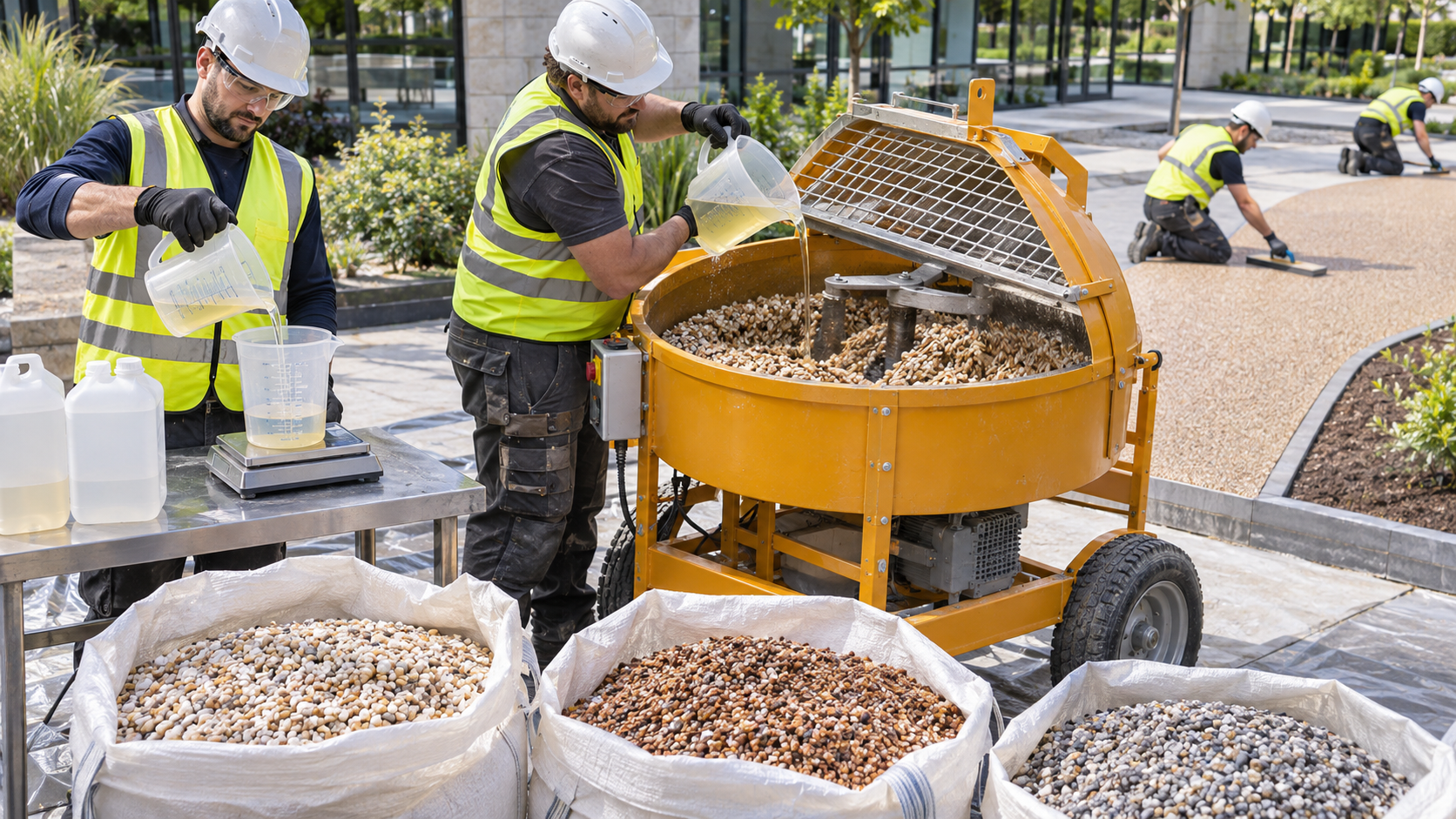
Prepare the Base
The base must be stable, clean and suitable for the intended paving system. Loose material, standing water, oil and dust can compromise adhesion.
Drainage design is also essential. A porous-looking aggregate surface does not guarantee that the complete pavement construction will drain correctly. The base, primer, layer thickness and edge details all contribute to water management.
Confirm whether a primer is required and whether the binder is approved for the proposed substrate.
Install a Controlled Trial Area
A laboratory sample cannot reproduce full-scale mixing and placement. Install a trial area using the intended workers, equipment and base.
Observe:
- Ease of mixing and discharge
- Aggregate coating consistency
- Trowelability
- Working time
- Surface uniformity
- Stone loss after cure
- Color change
- Edge integrity
- Bonding to the base
- Behavior after relevant exposure
The installer should avoid overworking the surface or contaminating tools with incompatible release materials.
Evaluate the Finished System
Allow the trial to cure according to the supplier’s instructions before testing or opening it to traffic. Examine the surface at several locations rather than relying on one small sample.
Project-specific testing may include bond strength, abrasion, slip resistance, water permeability, impact behavior or weathering. Use the standards required in the destination market.
No universal performance claim should be made without confirming the exact resin, aggregate, base and installation conditions.
Information to Provide the Supplier
Send Desay Chemical the aggregate sample, application location, traffic level, base construction, installation method, climate and required test standards.
Request the latest TDS and SDS for the proposed stone-binder grade, including component ratio, working time, cure schedule, packaging, storage and substrate limitations.
Post time: Nov-17-2026