



Edge banding protects the exposed core of particleboard or MDF while giving cabinet and furniture components a finished appearance. On an automatic edge-banding line, the adhesive must be melted, transferred to the panel edge and joined to the band within a short processing window.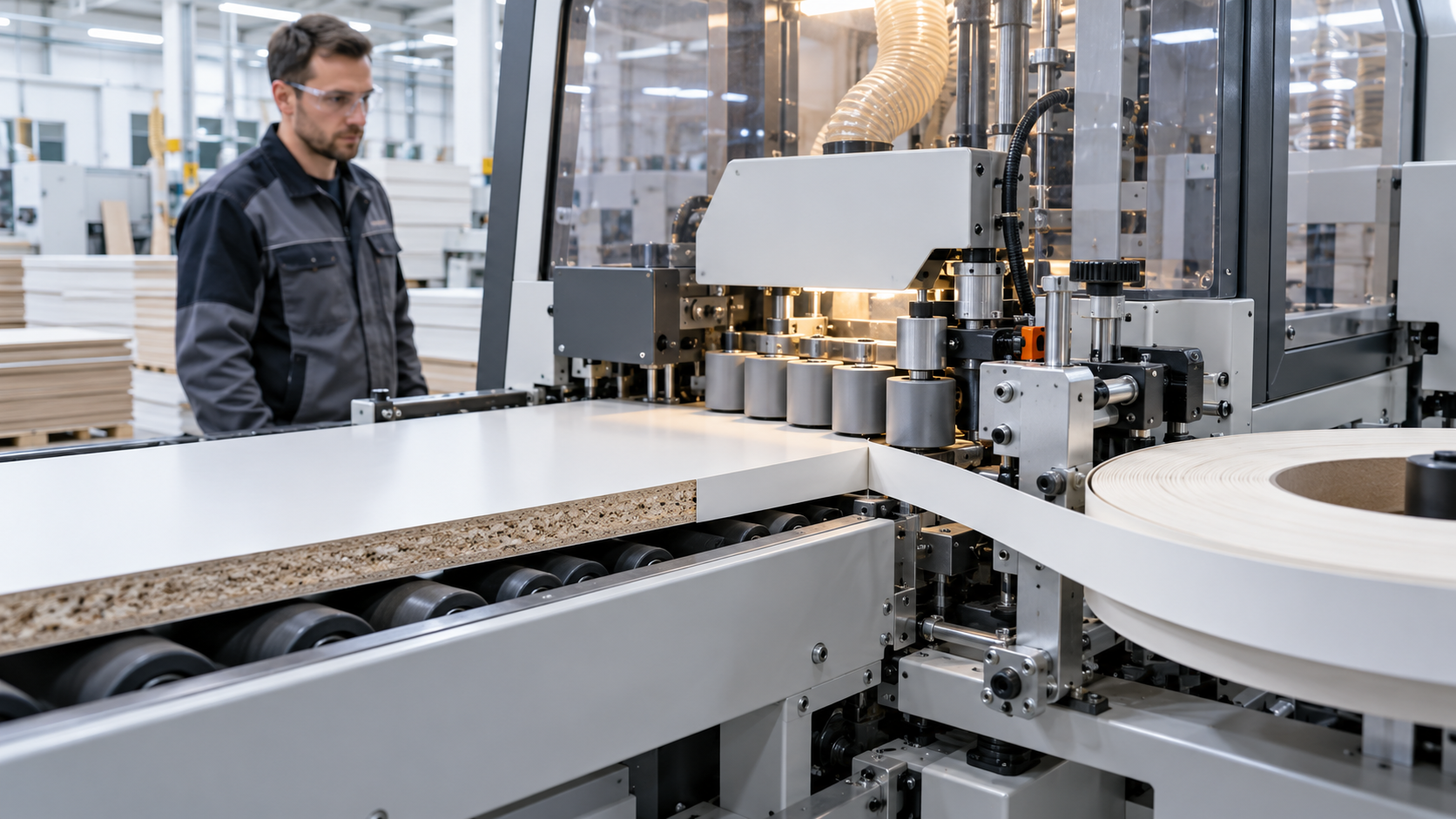
Reactive polyurethane hot melt, commonly called PUR hot melt, develops initial handling strength as it cools and subsequently continues curing through a moisture reaction. This processing behavior makes adhesive handling, equipment condition and production control important parts of product selection.
Desay Chemical includes a moisture-curing PUR hot melt adhesive in its polyurethane product range. Its website describes the product as a solid hot melt for bonding materials including wood and several treated plastics. Suitability for a particular edge-banding construction must still be verified through line trials.
Define the Panel and Edge-Band Combination
“Furniture board” and “PVC edge” are not complete substrate descriptions. Buyers should provide:
- MDF, particleboard, plywood or solid wood substrate
- Panel thickness and core density
- Melamine, veneer or other face finish
- PVC, ABS, PP or wood-veneer edge band
- Edge-band thickness and width
- Back-side primer or surface treatment
- Straight or shaped panel edge
- Required finished appearance
The cut edge should also be examined. A coarse or uneven particleboard core may require different processing from dense MDF.
Obtain edge-band material from the actual production supplier. A change in backing treatment can affect adhesion even when the color and dimensions remain unchanged.
Confirm Equipment Compatibility
PUR hot melt requires appropriate melting and application equipment. The adhesive must travel through the system at a stable condition and form a controlled layer on the panel edge.
Provide the adhesive supplier with:
- Edge-bander model
- Melting and application system
- Glue roller or nozzle configuration
- Typical panel feed speed
- Panel and band dimensions
- Normal operating conditions
- Existing cleaning procedure
Application temperature and machine settings are grade-specific. Do not copy values from an EVA adhesive or another PUR product.
Because reactive PUR is sensitive to moisture exposure before application, storage, opening and equipment shutdown procedures must follow the current supplier documentation.
Prepare the Panel Edge
The panel edge should be clean, straight and free from loose dust. Poor machining can create high and low areas that prevent uniform contact between the edge band and substrate.
Check extraction around the cutting and edge-banding equipment. Dust remaining on the panel may enter the adhesive layer or accumulate on the glue roller.
Cold panels and edge-band rolls can also change the available bonding window. When seasonal conditions vary, include realistic winter and summer production temperatures in the trial program.
Balance Application and Feed Speed
The applied adhesive must remain capable of forming a bond until the band reaches the pressure rollers. If the process is too slow or heat is lost too quickly, the adhesive may not wet the second surface adequately.
Excessive application can produce a visible glue line, contamination and additional cleaning. Too little adhesive may leave gaps, particularly on a rough panel core.
Evaluate:
- Adhesive coverage across the full edge
- Transfer to both bonded surfaces
- Glue-line thickness
- Band alignment
- Pressure-roller contact
- Time between application and compression
- Stability at normal production speed
Trials should be run at standard line speed rather than only at a slower setup speed.
Separate Initial Handling from Final Cure
A panel may be ready for trimming soon after the adhesive cools, but this does not mean the PUR reaction is complete.
Use the same conditioning period when comparing products. Tests performed at different stages cannot be directly compared.
Follow the product documentation before conducting final peel, heat, moisture or durability evaluations. Desay’s product page describes the combination of cooling-based positioning and subsequent chemical curing, but exact cure conditions and documented performance must be confirmed for the selected grade.
Inspect the Finished Edge
Examine panels from the beginning, middle and end of the production run. Check:
- Gaps between band and panel
- Edge lifting at corners
- Visible or uneven glue lines
- Band movement during trimming
- Chipping of the substrate
- Adhesive contamination on the face
- Changes after conditioning
Cut representative samples to inspect the bond-line continuity. Include later operations such as trimming, drilling, packing and transport simulation when they are relevant to the finished furniture component.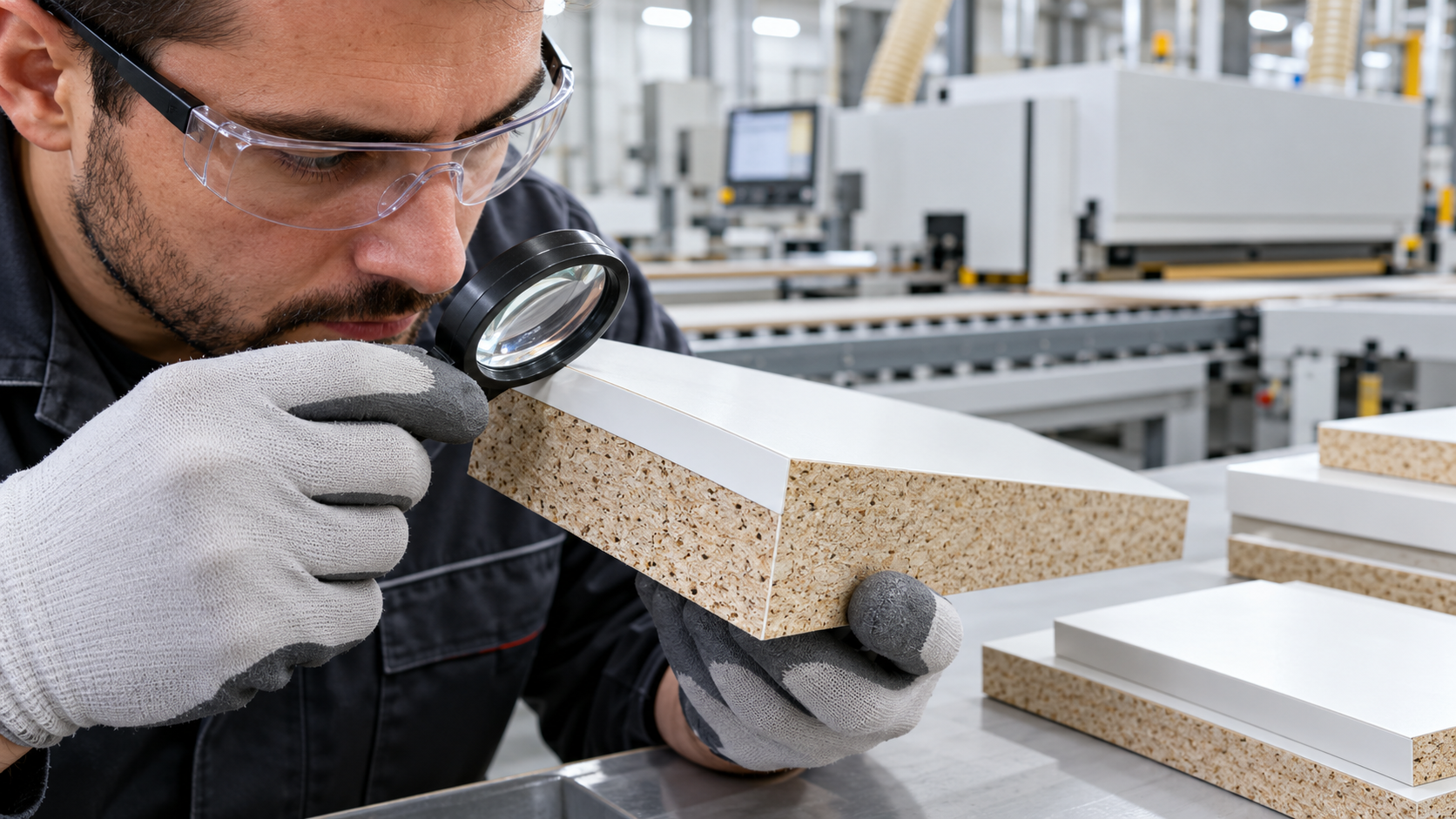
Information Needed for Product Selection
Send Desay Chemical the substrate, edge-band material, primer information, machine model, feed speed and required end-use tests. If the furniture component needs a specific heat, moisture or chemical-resistance level, provide the test method and acceptance criteria.
Specific application temperature, open time, viscosity, cure period, packaging and storage limits must be supplied for the proposed grade through its current TDS. They should not be inferred from general PUR technology.
Post time: Nov-17-2026