



Pressure-sensitive adhesive must perform two jobs that can pull in opposite directions. It needs to flow sufficiently under light pressure to make contact with the substrate, while retaining enough internal strength to resist slipping, edge lifting and adhesive transfer.
This balance is why a product with very high initial tack is not automatically the best adhesive for every label or tape. Selection should consider the complete construction: face material, adhesive, release liner, target surface and end-use conditions.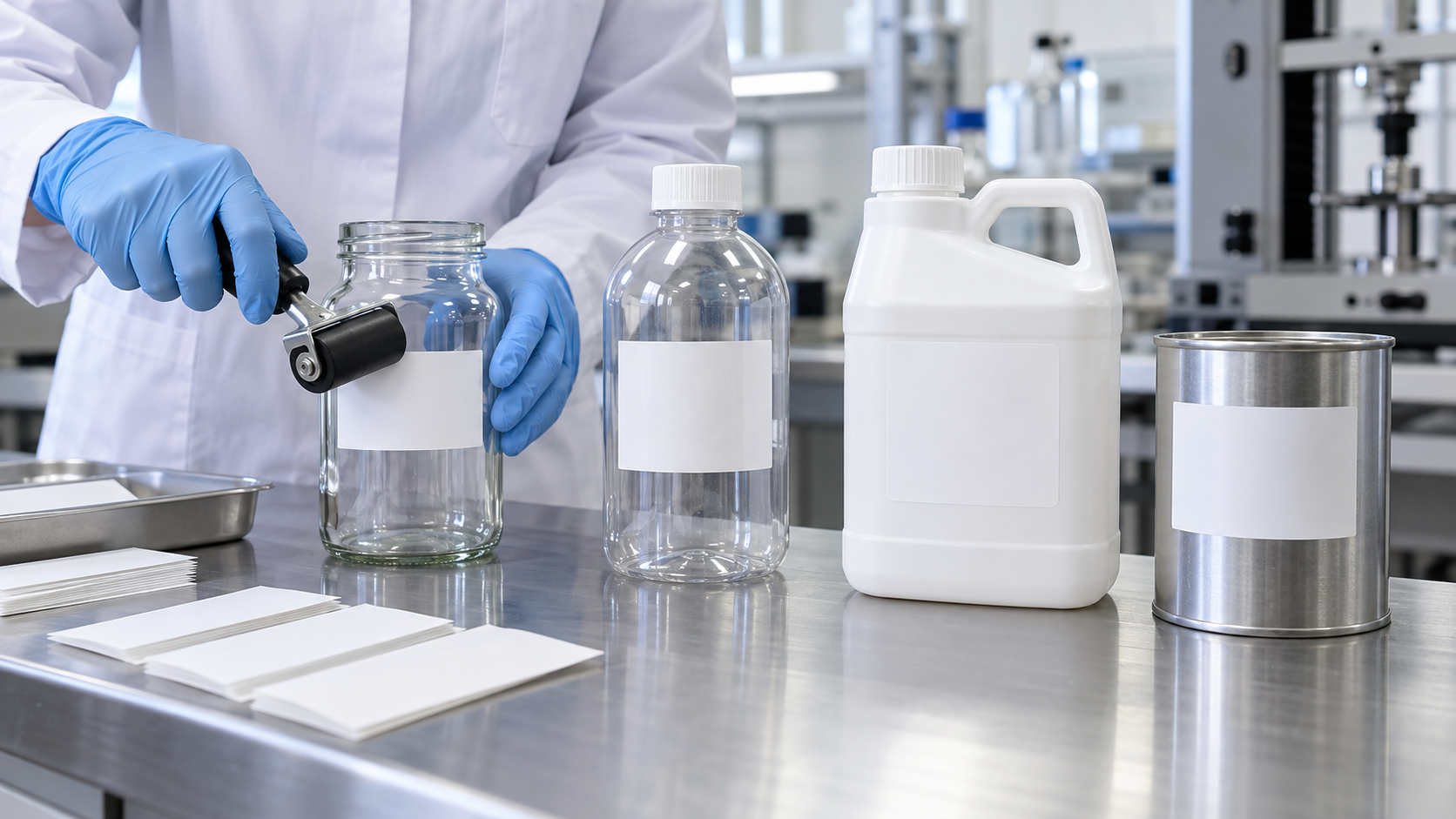
Start with the Target Substrate
The surface receiving the label or tape has a major influence on adhesion.
Glass, metal and PET generally behave differently from lower-surface-energy plastics such as polyethylene and polypropylene. Corrugated board introduces another variable because it may be dusty, rough or highly absorbent.
Document the actual substrate rather than describing it only as “plastic” or “packaging.” Buyers should provide:
- Polymer or material type
- Smooth, textured or curved surface
- Surface coating or treatment
- Clean, dry or potentially contaminated condition
- Rigid or flexible construction
- Recycled-content requirements, if relevant
Avery Dennison’s technical guidance notes that moisture, dirt and dust can affect the bond and recommends testing the complete label construction for its specific application.
Define Permanent, Removable or Repositionable Performance
The intended removal behavior must be established before coating trials.
A permanent label is expected to remain attached throughout its service life. A removable construction should release without damaging the substrate or leaving unacceptable residue. Repositionable products need enough early tack to stay in place while allowing an initial correction period.
These descriptions must be converted into test criteria. A label that removes cleanly from glass may behave differently on painted metal or soft plastic. Test every important substrate and allow the bond to build for the agreed conditioning period before judging removability.
Balance Tack, Peel and Shear
Three properties are commonly considered when evaluating PSA:
- Tack describes how quickly the adhesive forms a bond during brief contact.
- Peel adhesion measures resistance to removal at a defined angle and speed.
- Shear resistance reflects the adhesive’s ability to resist movement under a sustained load.
Increasing one property can affect the others. A very soft adhesive may provide strong initial grab but show greater movement under load. A highly cohesive adhesive may resist shear well while requiring more pressure or dwell time to develop adhesion.
Use the same test method, coating weight, face stock, liner and conditioning period when comparing samples. Results from different constructions are not directly comparable.
Separate Application Temperature from Service Temperature
Application temperature is the temperature at which the label is placed on the product. Service temperature is the range experienced after the bond has formed.
This distinction is especially important for refrigerated, frozen or heat-exposed products. A label may survive cold storage after being applied at room temperature but fail if it is initially applied to a cold, damp container.
Current Avery Dennison guidance recommends considering both application and service temperatures and notes that adhesive behavior can change significantly with temperature.
Test labels on conditioned containers at the lowest realistic application temperature. Include condensation or moisture only when it accurately represents the end-use environment and the selected adhesive is intended for that condition.
Match the Adhesive to the Coating Line
For converters, adhesive performance begins before the label reaches the customer.
The wet coating must transfer evenly, dry adequately and laminate cleanly to the selected facestock and release liner. Key variables include:
- Wet and dry coating weight
- Web speed
- Dryer temperature and airflow
- Facestock dimensional stability
- Release-liner compatibility
- Rewind tension
- Residual moisture after drying
Desay Chemical’s YM-8010 waterborne pressure-sensitive adhesive is an acrylic-based liquid intended for tape, label and packaging applications. Its published solid content and viscosity provide initial processing information, but coating conditions should be established on the customer’s equipment.
Check Converting and Dispensing Performance
A coated laminate can meet laboratory adhesion targets and still cause problems during die-cutting or automatic dispensing.
Run the trial material through the planned converting steps. Inspect for adhesive ooze, label curl, matrix stripping difficulty, contamination of cutting tools and inconsistent release from the liner.
Then test finished label rolls on the actual dispensing equipment. Evaluate label placement, edge lifting, container curvature and adhesion after normal storage.
Send Complete Information to the Supplier
A useful PSA inquiry should include the facestock, release liner, target substrate, coating method, dry coating weight, application temperature, service conditions and required removal behavior.
Contact Desay Chemical with these details and representative material samples when requesting a waterborne PSA recommendation. Regulatory or food-packaging requirements must be confirmed for the exact grade and intended market; they should never be inferred from the adhesive chemistry alone.
Post time: Sep-28-2026