



Film lamination gives printed book covers, packaging sheets and promotional materials a more durable and visually refined surface. The process may appear straightforward, but consistent results depend on the interaction between the printed paper, plastic film, adhesive and laminating machine.
A laminating adhesive must wet the printed surface, remain stable during machine application and produce an even bond after heat and pressure are applied. Buyers should therefore evaluate the complete converting process rather than select an adhesive solely by viscosity or price.
Desay Chemical offers 1908 water-based laminating adhesive for bonding paper to plastic films such as BOPP and PET on heat-assisted laminating equipment. The suitability of the grade for a particular ink, film and machine must still be confirmed through production trials.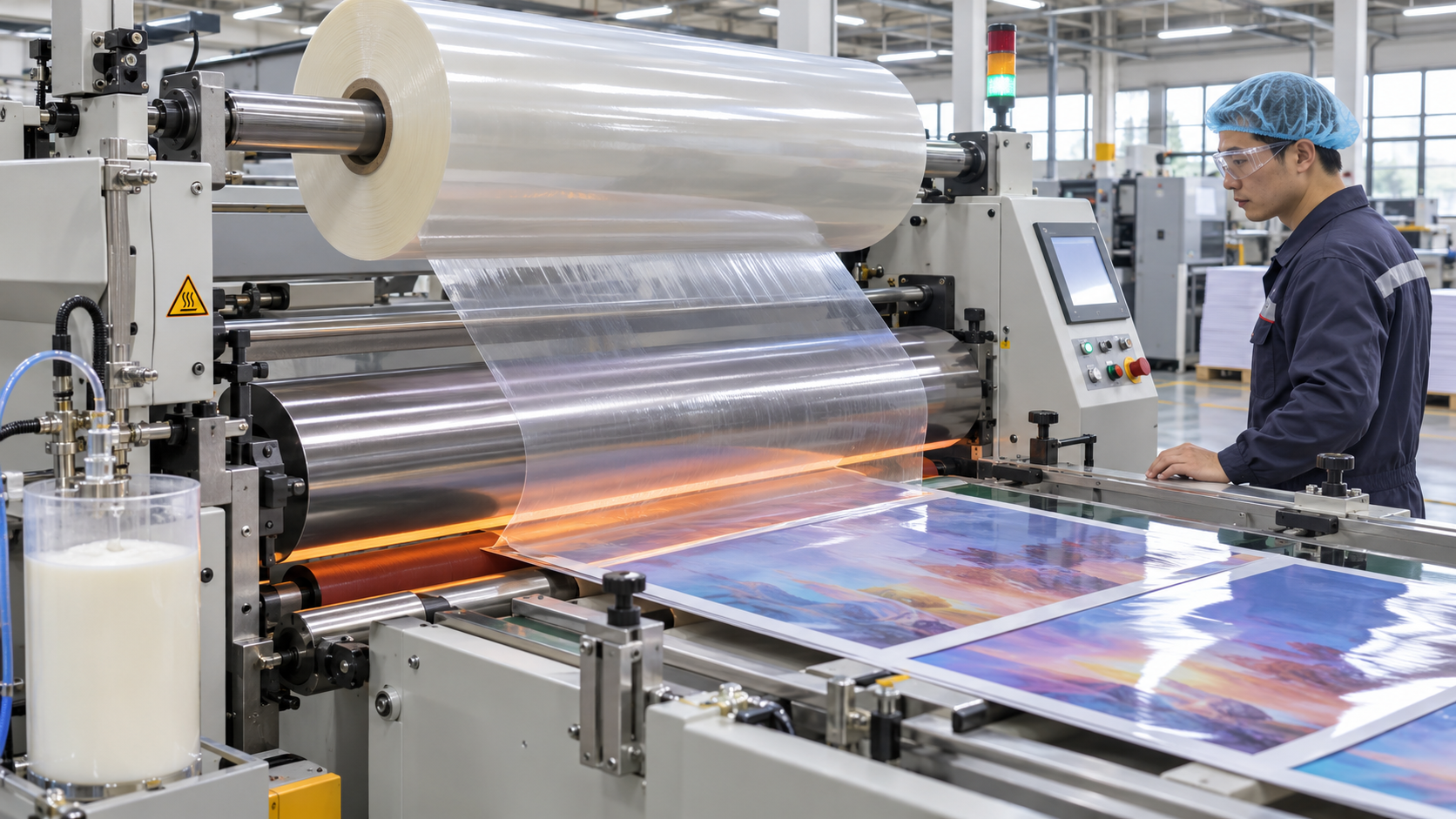
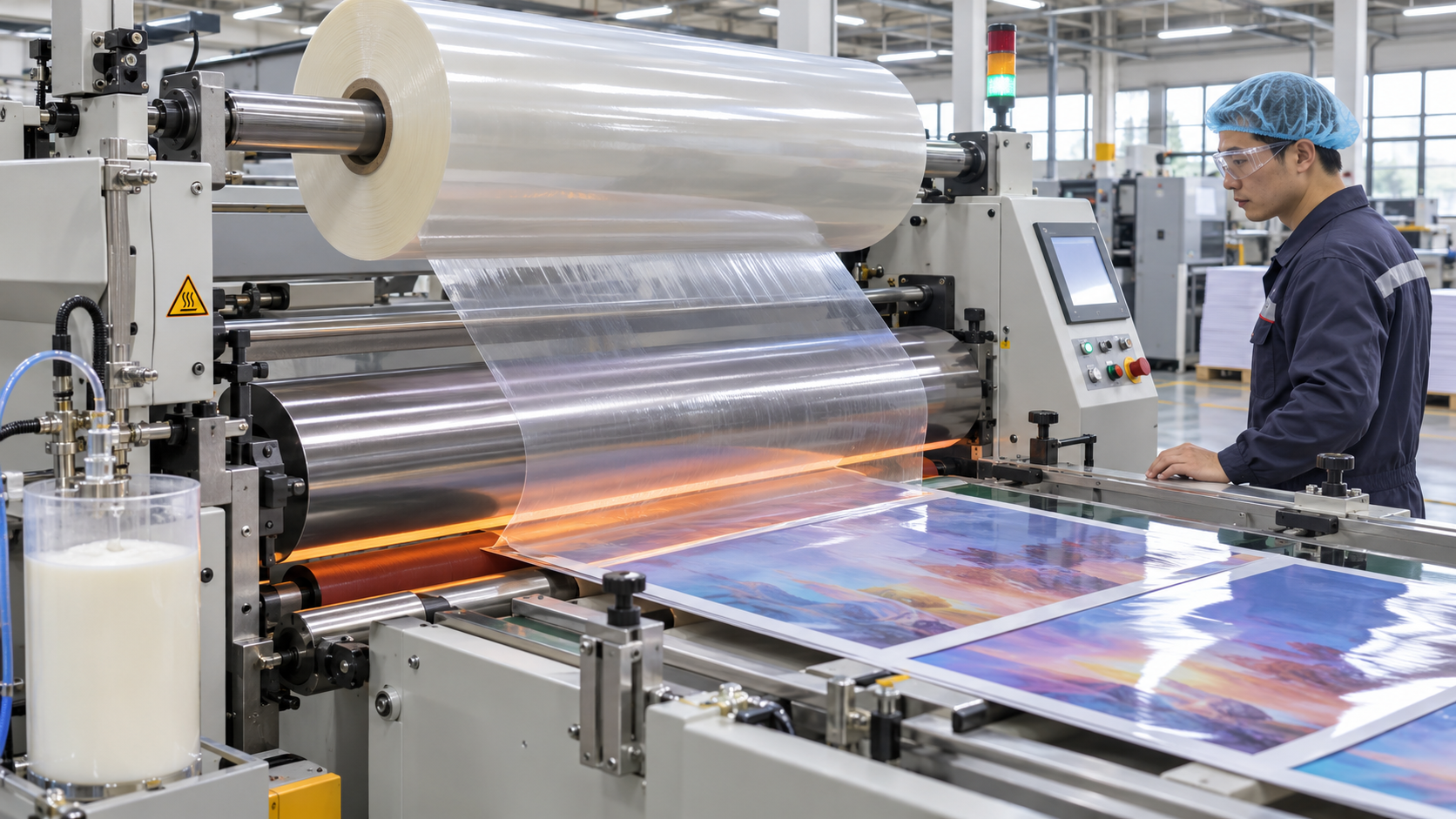
Define the Printed Paper and Film
“Printed paper with BOPP” is not a complete substrate specification. Purchasing and technical teams should identify:
- Paper grade and grammage
- Coated or uncoated surface
- Offset, gravure, flexographic or digital printing
- Ink type and coverage
- Presence of spray powder
- BOPP, PET or another film
- Film thickness and surface treatment
- Gloss, matte or specialty finish
- Required downstream operations
Heavy ink coverage can change the surface presented to the adhesive. Metallic inks, varnishes and anti-scuff coatings may also influence wetting and adhesion.
Send the supplier representative printed sheets rather than unprinted paper from the same mill.
Confirm That Heat Lamination Fits the Process
Heat-machine laminating adhesive is intended for equipment that uses controlled temperature and pressure during film application. It should not be treated as interchangeable with a cold-lamination adhesive or pre-coated thermal film.
Provide the supplier with the machine type, coating method, operating speed, roller arrangement and normal production temperature range. Settings are adhesive- and machine-specific; values from another product should not be copied without validation.
Desay identifies 1908 as a water-based adhesive for paper-to-film lamination on heated machinery. Exact application temperature, coating weight and drying conditions should be taken from the current technical data sheet for the supplied batch.
Prepare the Printed Surface
Printing ink should be adequately dried before lamination. Residual solvents, oils or moisture can contribute to bubbles, poor adhesion or inconsistent appearance.
Excessive spray powder may create microscopic gaps between the printed sheet and the film. Dust and loose surface contamination should also be controlled before coating.
When several ink colors or finishes are used, test the areas with the heaviest coverage. A laminate that performs well over lightly printed paper may behave differently over a dense dark background.
Balance Coating, Drying and Line Speed
The applied adhesive must form a continuous layer without creating excessive moisture inside the laminate. Too little adhesive can leave silvering or incomplete contact, while excessive application may increase drying demand and encourage squeeze-out.
Evaluate the relationship among:
- Wet coating quantity
- Oven or drying-section performance
- Film and paper temperature
- Machine speed
- Nip pressure
- Time between coating and lamination
- Workshop humidity
Run trials at normal production speed. A result obtained on a slow setup run may not represent continuous commercial production.
Inspect Optical and Bonding Quality
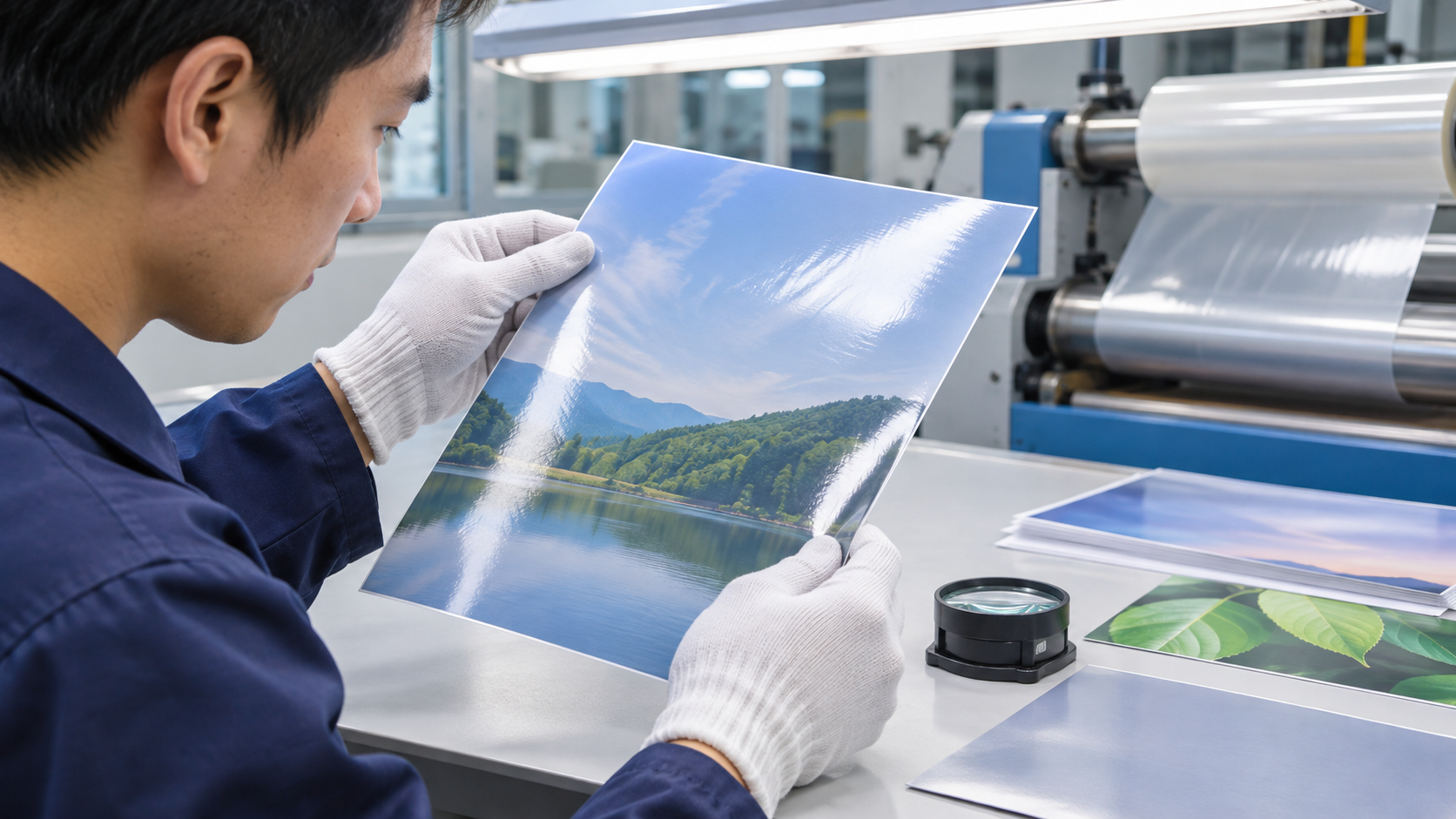
The laminated surface should be inspected under controlled lighting. Check for:
- Bubbles and silvering
- Wrinkles or film distortion
- Cloudiness
- Roller marks
- Edge lifting
- Uneven gloss
- Color change
- Delamination during folding or trimming
Allow samples to condition before final evaluation. Immediate handling strength and the fully dried laminate are not necessarily the same.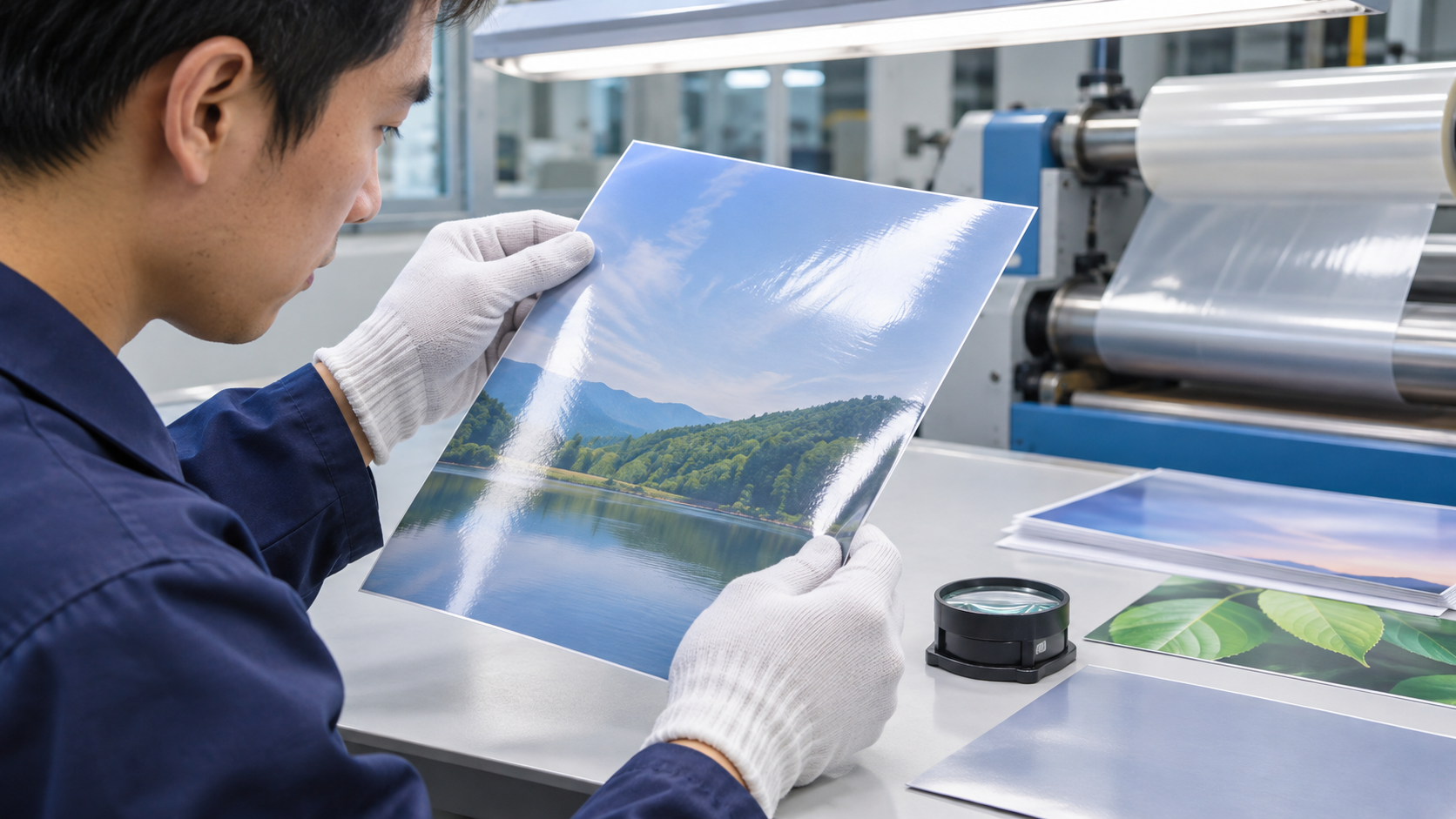
Include Downstream Converting in the Trial
Book covers may later be creased, folded, glued, trimmed or bound. Packaging sheets may be die-cut, embossed or formed into cartons. These operations can introduce stresses that are absent from a flat peel sample.
Produce complete finished covers or printed components during approval. Pay particular attention to fold lines, trimmed edges and heavily printed areas.
Information to Send the Supplier
Provide printed-sheet samples, film specifications, machine details, coating method, operating speed and required finished-product tests.
Specific viscosity, solids content, drying temperature, application quantity, storage conditions and documented performance for 1908 should be confirmed through Desay Chemical’s latest TDS.
Post time: Nov-17-2026