



Laminating decorative PVC film onto wood-based panels is a common way to produce furniture components, interior panels and cabinet materials. Although the finished construction appears simple, reliable bonding depends on the interaction between the film, board surface, adhesive and pressing process.
A product that performs well on one MDF and PVC combination may behave differently when the board density, film backing or pressing conditions change. International buyers should therefore evaluate a panel adhesive as part of a complete production system rather than compare products using bond-strength claims alone.
Desay Chemical offers its 858 water-based white panel adhesive for laminating PVC film, PVC foam board and decorative leather to substrates including MDF, particleboard and plywood. Its product page identifies manual or roller application and several pressing methods, although the appropriate process must be confirmed for the proposed construction.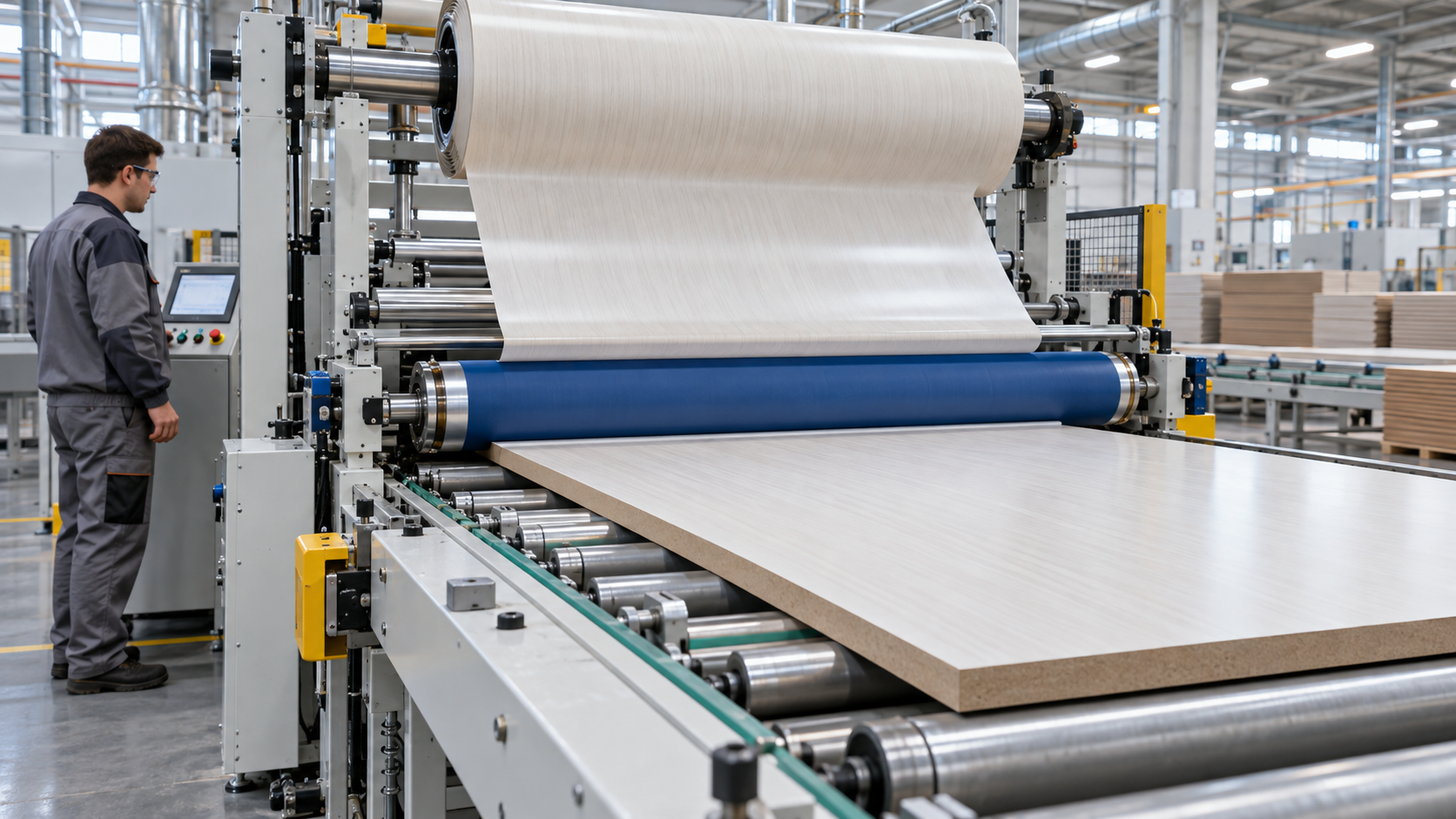
Define the Substrate Combination
“MDF and PVC film” is not a complete purchasing specification. Buyers should identify:
- Board type and density
- Sanded or factory-finished surface
- Board moisture condition
- PVC film thickness and backing treatment
- Decorative leather or synthetic-leather construction
- Presence of plasticizers or surface coatings
- Required panel dimensions
- Indoor or outdoor end use
Film samples should come from the intended production supplier. Visually similar PVC films may contain different plasticizer systems or backing treatments, affecting adhesive wetting and long-term compatibility.
Select the Correct Lamination Process
Flat lamination, cold pressing, hot pressing and vacuum forming are different processes. They should not automatically use identical adhesive settings.
In continuous flat lamination, the adhesive must coat the board uniformly before the film enters the pressure rollers. Cold pressing provides a longer compression period, while hot pressing introduces temperature as another variable. Vacuum forming also requires the material to remain bonded around shaped surfaces.
Desay lists 858 as compatible with manual or mechanical roller application and identifies cold pressing, hot pressing and vacuum forming among its potential processes. Buyers should request model-specific recommendations before choosing application temperature, open time or pressure.
Prepare the Board Surface
Dust, loose fibers and machining marks can prevent complete contact. The board should be flat, clean and consistent in absorbency.
Excessively porous areas may draw water and adhesive into the substrate too rapidly. Highly sealed surfaces may create the opposite problem by limiting absorption and slowing drying. Conduct coating trials across several boards from the production batch rather than using one carefully selected laboratory sample.
Record sanding grade, cleaning method, board temperature and moisture condition during each trial.
Control Coating Weight and Open Time
An uneven adhesive layer may create bubbles, weak areas or visible surface defects. Too much adhesive can extend drying and encourage squeeze-out, while insufficient application may leave incomplete coverage.
Open time must suit the distance between the coating station and laminating rollers. It can change with:
- Line speed
- Adhesive quantity
- Workshop temperature
- Air movement
- Board absorbency
- Film permeability
- Time before pressing
The product page provides general processing information, but production settings and any published open-time value should be verified in the current technical data sheet under the supplier’s stated test conditions.
Evaluate Plasticizer Compatibility
Flexible PVC commonly contains ingredients that can migrate over time. An adhesive may provide satisfactory initial adhesion but lose performance after the assembled panel has been stored or exposed to heat.
Desay describes 858 as formulated to resist PVC plasticizer migration. This claim should be verified with the buyer’s actual PVC film through an agreed aging and peel-testing program.
Testing should include all PVC colors, suppliers and backing treatments expected in commercial production.
Inspect Complete Laminated Panels
Evaluate full-size panels after an appropriate conditioning period. Check for:
- Bubbles or unbonded areas
- Edge lifting
- Film shrinkage or movement
- Surface marks and roller lines
- Adhesive squeeze-out
- Changes after cutting or drilling
- Separation after controlled aging
- Variation across the panel width
Use the test method and acceptance criteria required for the finished furniture or decorative product. Avoid presenting laboratory strip results as universal panel-performance guarantees.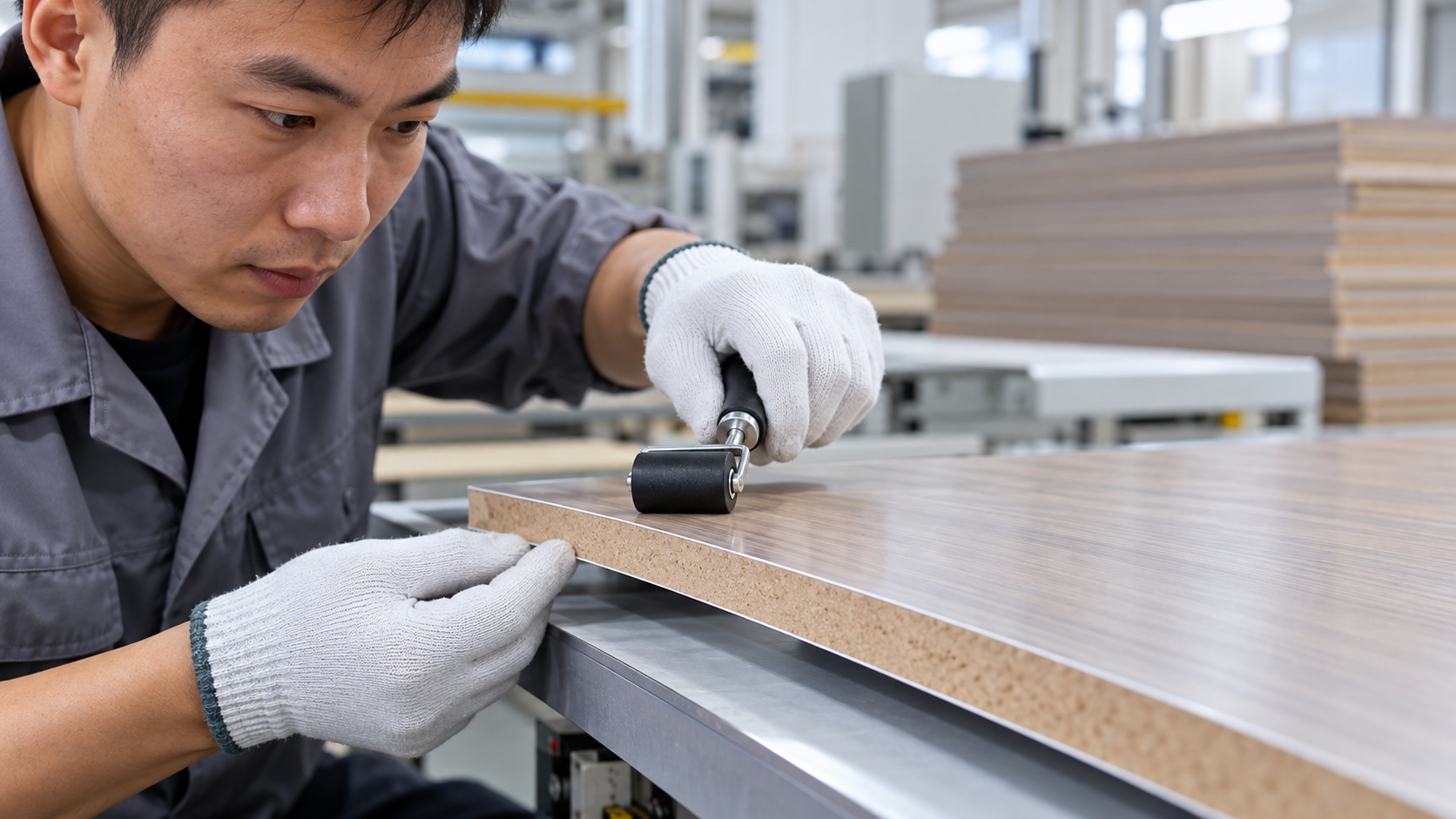
Information to Provide the Supplier
Send Desay Chemical the board samples, PVC film or leather, application equipment, intended coating weight, line speed, pressing process and required tests.
Specific solids content, viscosity, storage conditions, pressing temperature, open time and documented resistance properties must be confirmed in the current TDS for the supplied 858 grade.
Post time: Nov-17-2026