



How to Choose the Right VAE Emulsion for Cement-Based Applications
VAE emulsion is widely used in cement-based products to improve flexibility, adhesion and overall durability. However, not every VAE grade performs in the same way. Differences in polymer composition, viscosity, solid content and compatibility can significantly affect the finished formulation.
For manufacturers of waterproof coatings, cement modifiers and other construction materials, selecting a suitable VAE emulsion requires more than simply comparing technical data sheets. The intended application, local climate, processing method and performance targets should all be considered.
Start with the Intended Application
The first step is to define exactly how the emulsion will be used. VAE emulsions can be incorporated into a variety of construction products, including:
- Flexible cementitious waterproof coatings
- Polymer-modified cement mortars
- Tile-related construction materials
- Cement bonding agents
- Repair mortars
- Surface treatment formulations
Each application places different demands on the polymer.
For example, a flexible waterproof coating needs to accommodate small movements in the substrate without cracking. A cement bonding agent, on the other hand, may place greater emphasis on adhesion to concrete or masonry surfaces.
Clearly defining the application makes it easier for the supplier to recommend a suitable starting grade.
Evaluate Flexibility Requirements
One of the main reasons for adding VAE emulsion to a cement-based formulation is to reduce brittleness.
Traditional cement materials are strong under compression but may crack when exposed to movement, vibration or thermal expansion. A suitable polymer emulsion helps create a more flexible internal structure, allowing the finished product to better tolerate these stresses.
The required level of flexibility depends on the project. A rigid indoor application may need only moderate modification, while a waterproof coating used on balconies, bathrooms or exterior surfaces may require substantially greater flexibility.
Rather than requesting the “most flexible” product, buyers should explain the expected substrate movement and end-use environment.5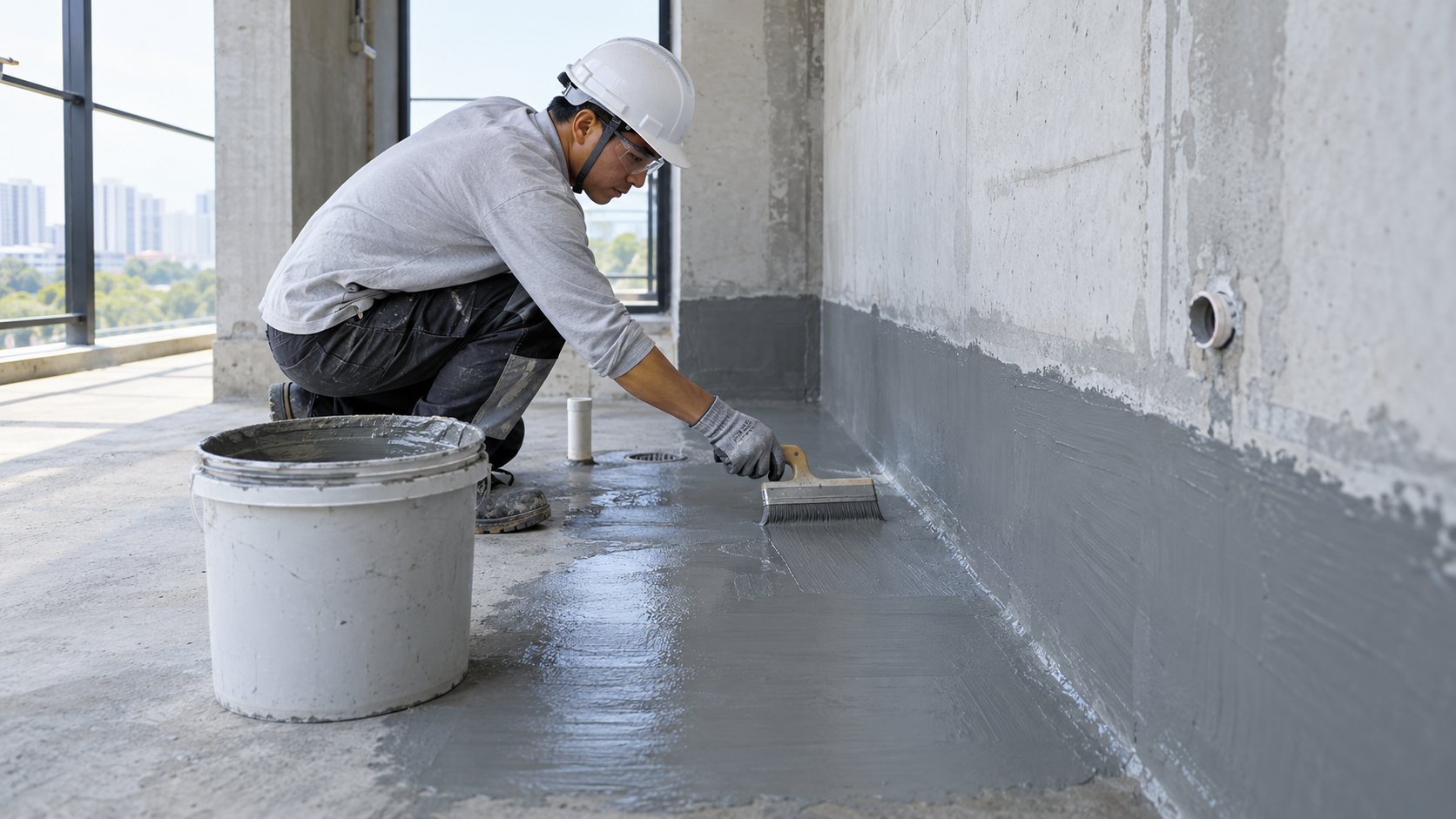
Consider Water and Moisture Exposure
Water resistance is especially important for construction products used in humid climates or areas exposed to frequent rainfall.
VAE emulsion can improve the cohesion and adhesion of a cementitious system, but the performance of the final product also depends on the cement, fillers, additives, polymer dosage and curing conditions.
For waterproofing applications, buyers should discuss:
- Whether the product will face temporary or continuous water exposure
- Whether it will be used indoors or outdoors
- The expected humidity during application
- The condition and absorbency of the substrate
- Whether tiles or another protective layer will be installed afterward
These details help prevent the selection of an emulsion based on one isolated specification.
Check Compatibility with the Complete Formulation
A VAE emulsion does not work independently. It must remain compatible with cement, fillers, pigments, defoamers, thickeners and other additives in the formulation.
Compatibility problems can lead to excessive foam, poor storage stability, uneven viscosity or reduced working time. In some cases, an emulsion that performs well in one formulation may behave differently when the cement source or additive package changes.
Laboratory testing with the customer’s actual raw materials is therefore essential. Small-batch trials should be completed before commercial production, especially when changing suppliers or modifying an existing recipe.
Account for Temperature and Humidity
Application conditions can affect drying, film formation and cement hydration.
In hot climates, water may evaporate too quickly, reducing working time and making application more difficult. In humid environments, drying can be slower even when the temperature is high. These conditions may influence the choice of emulsion and the balance of other formulation components.
Manufacturers serving tropical or seasonal markets should provide their supplier with typical application temperatures and humidity levels. This allows the recommendation to reflect real working conditions rather than laboratory conditions alone.
Review Processing and Storage Needs
The emulsion should also suit the manufacturer’s production equipment and storage environment.
Important considerations include mixing order, mixing speed, required viscosity, packaging size and expected storage temperature. Excessively aggressive mixing can introduce unwanted air, while unsuitable storage conditions may affect emulsion stability.
Before placing a bulk order, confirm the recommended handling procedure and conduct a production-scale trial whenever possible.
Test the Finished Product, Not Only the Raw Material
Technical specifications are useful for initial screening, but the final decision should be based on testing the complete cement-based product.
Depending on the application, evaluation may include adhesion, elongation, water resistance, crack resistance, workability and drying behavior. Samples should be tested on representative substrates and under conditions similar to the target market.
A Practical Selection Process
Choosing VAE emulsion becomes easier when the supplier receives complete application information. Buyers should share the materials being used, desired performance, production process, climate conditions and relevant testing requirements.
Desay Chemical supplies VAE emulsions for different industrial and construction applications. Contact our team with your formulation and performance requirements so we can help identify an appropriate grade for laboratory evaluation.
Post time: Sep-07-2026