



Upholstered furniture production involves several bonding operations that are difficult to standardize with one generic adhesive. A sofa or mattress component may combine flexible polyurethane foam, fabric, felt, nonwoven material, leather, synthetic leather and wood-based substrates.
The adhesive must fit both the material combination and the assembly process. Fast initial grab may be important, but spray quality, working time, bond flexibility and production safety can be equally significant.
SBS adhesive is a contact adhesive based primarily on styrene-butadiene-styrene thermoplastic elastomer. Desay Chemical positions its SBS contact adhesive for applications including furniture manufacturing, decoration and footwear. A specific grade should nevertheless be approved using the buyer’s actual materials and production conditions.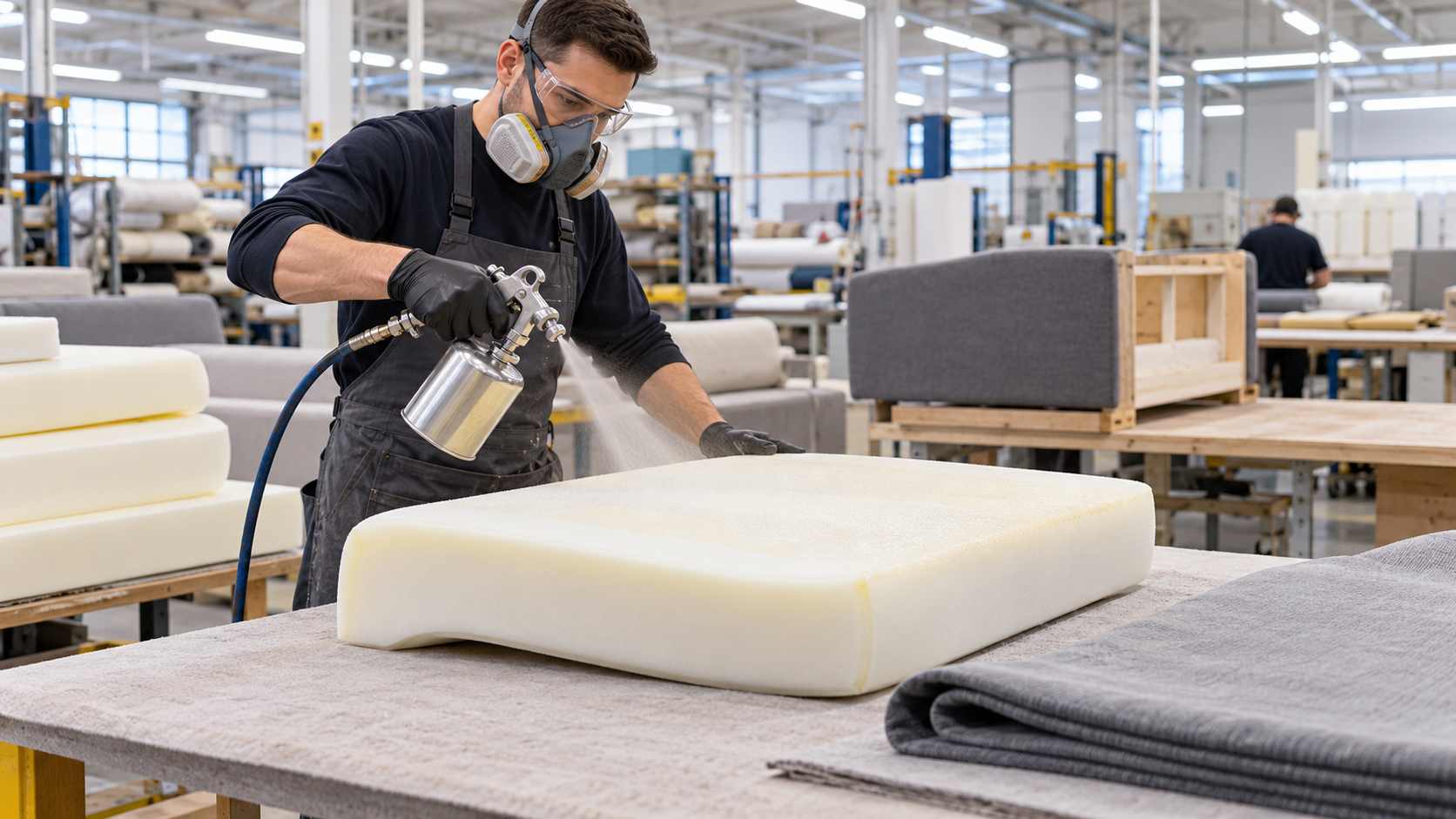
Define Every Material in the Assembly
“Foam to fabric” is not a sufficiently detailed application description. Foam density, cell structure and surface condition may influence how much adhesive remains at the bonding interface.
Fabric constructions also vary. A tightly woven textile, porous nonwoven and coated synthetic leather will not absorb or retain adhesive in the same way.
Before requesting samples, identify:
- Foam type and density
- Fabric, felt or leather construction
- Surface coatings or backing treatments
- Wood, plywood or fiberboard components
- Bond area and joint geometry
- Whether the bonded part will be compressed or flexed
- Required time before the component can be handled
Provide production samples rather than relying only on material names.
Match the Adhesive to the Application Method
Contact adhesive may be applied by spray gun, brush, roller or other controlled equipment. The selected method affects coverage, transfer efficiency and production consistency.
Spraying is common when large foam surfaces require a light, even layer. However, the adhesive and spray equipment must be compatible. Poor atomization can leave heavy wet areas, dry spray or incomplete edge coverage.
For a useful recommendation, provide the spray-gun type, nozzle arrangement, working pressure and normal application distance. If the adhesive will be brushed or rolled, explain the required spread rate and surface dimensions.
Viscosity, dilution instructions and equipment-cleaning requirements must be confirmed from the technical data sheet for the proposed grade.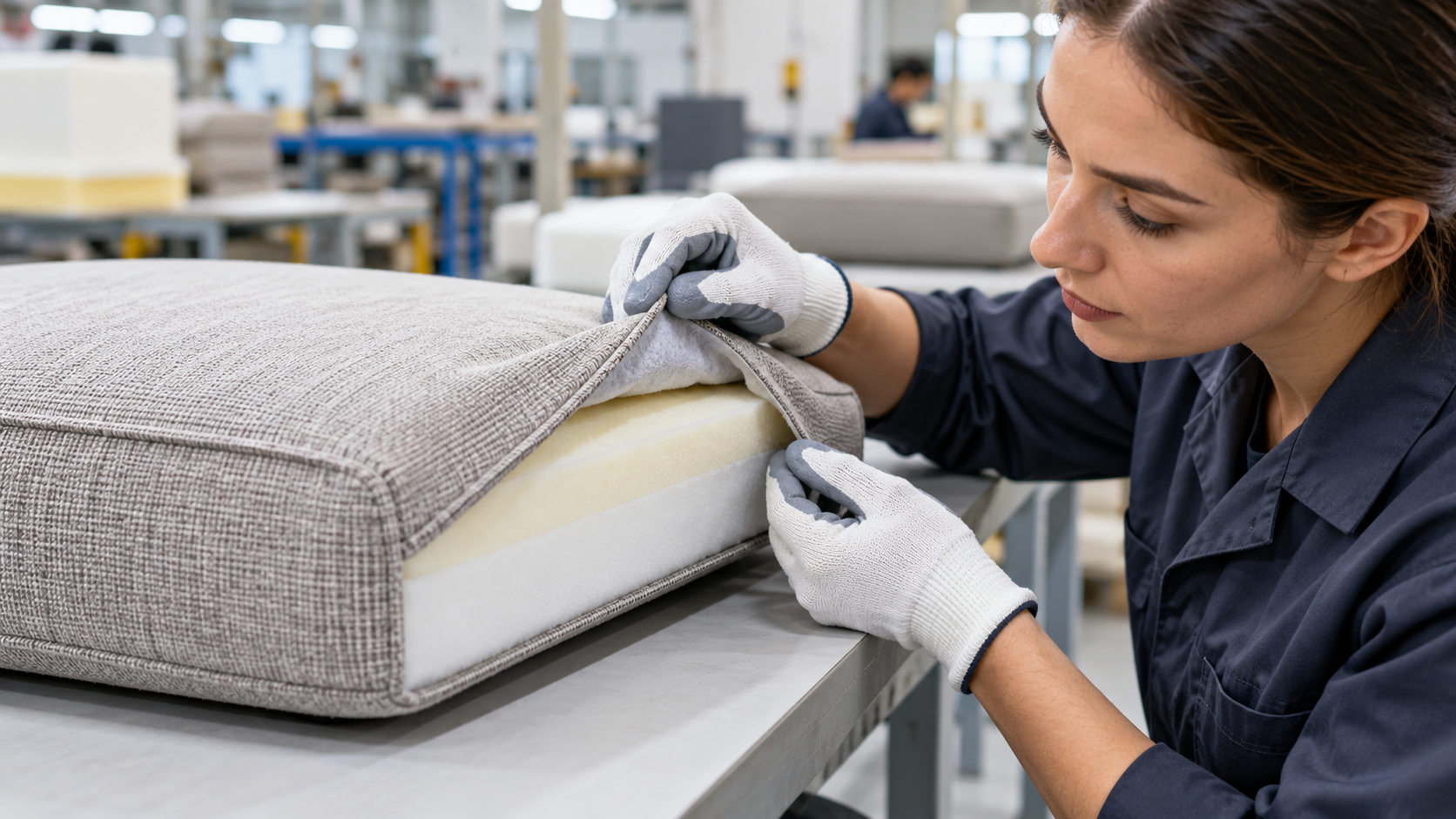
Control Coating and Tack Development
A contact adhesive generally requires controlled coating and an appropriate waiting period before the two surfaces are joined. Joining too early may trap excessive solvent, while waiting too long can reduce effective transfer and bonding.
The correct interval depends on the adhesive, coating weight, substrate absorption, airflow and workshop conditions. It should not be determined by a single universal time.
During trials, record:
- Coating pattern and quantity
- Single-sided or double-sided application
- Time between coating and assembly
- Workshop temperature and ventilation
- Pressure applied during assembly
- Time before trimming, sewing or packaging
Edges and curved areas deserve particular attention because incomplete coverage may lead to lifting during later handling.
Evaluate Flexibility as Well as Initial Grab
A bond that feels strong immediately may still be unsuitable for upholstery. Finished components are compressed, folded and repeatedly loaded during service.
Inspect whether the bonded layers move naturally together. An overly rigid bond line may change the feel of the cushion or create a visible hard area beneath thin upholstery.
The trial should include normal downstream operations such as wrapping, trimming, sewing and assembly. Where appropriate, condition the samples before repeating compression and flexing checks.
Include Production Safety in the Buying Decision
The buyer should obtain the current safety data sheet before testing. Confirm ventilation, personal protective equipment, storage, ignition-control and disposal requirements for the proposed product.
Do not infer solvent content, flammability classification, emissions information or regulatory compliance from the general product category. These details must be verified for the exact grade and destination market.
Run a Controlled Production Trial
Produce several complete components at normal line speed. Examine adhesive distribution, edge lifting, surface staining, foam deformation and bond performance after handling.
Use the same materials and conditioning period when comparing suppliers. Record the approved settings so that later production changes can be traced.
Post time: Nov-17-2026