



Kraft paper may appear to be an easy material to bond, but its behavior varies considerably between grades. Paper weight, porosity, recycled-fiber content, surface treatment and moisture level can all change how an adhesive wets and penetrates the sheet.
This is why choosing PVA glue for kraft paper should begin with the actual converting process rather than a general request for “strong paper glue.” A suitable product must provide reliable bonding without causing excessive penetration, wrinkling, staining or slow downstream handling.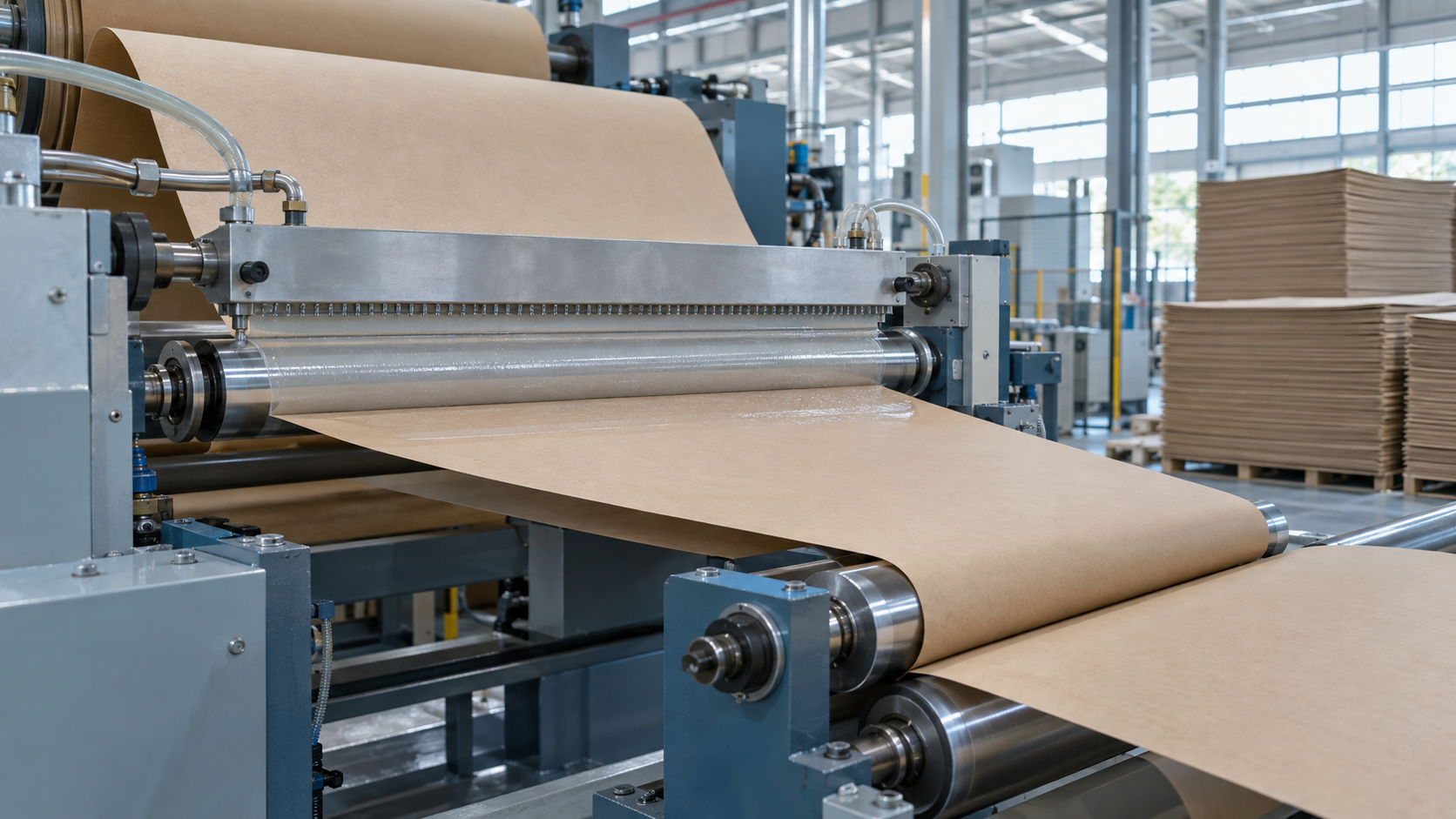
Identify the Exact Paper Structure
Before comparing adhesives, specify the materials on both sides of the bond.
An uncoated kraft sheet is usually more absorbent than coated or printed paper. Recycled kraft paper may also absorb adhesive differently from virgin-fiber paper. If two sheets have significantly different porosity, the adhesive may penetrate one layer faster than the other.
The supplier should know:
- Paper type and grammage
- Virgin or recycled fiber content
- Coated, printed or untreated surface
- Number of layers being laminated
- Required appearance of the finished product
- Whether the process is manual or machine-based
Whenever possible, send production paper rather than a visually similar sample. A small difference in surface treatment may produce a different bonding result.
Balance Penetration and Surface Coverage
Water-based PVA adhesive needs sufficient contact with the paper fibers, but deeper penetration is not always better.
If the adhesive penetrates too quickly, too little may remain at the interface to form an effective bond. Excessive adhesive, however, can increase paper deformation, drying time and the risk of visible marks.
The objective is to form a continuous, controlled adhesive layer that wets both surfaces without saturating the paper. Coating weight should therefore be established through trials using the intended applicator and production materials.
Inspect the dried sample for fiber tear. When the bonded paper is pulled apart, disruption within the paper fibers can be more informative than simply observing whether the adhesive feels hard.
Match Viscosity to the Application Method
Viscosity affects adhesive transfer, coating uniformity and machine behavior. A product suitable for brush application may not necessarily run consistently through a roller or automated delivery system.
If viscosity is too low for the setup, the adhesive may spread outside the intended area or soak rapidly into the sheet. If it is too high, coating may become uneven and the applicator may require greater adjustment.
Provide the supplier with details of the coating system, roller configuration, working speed and desired glue width. The correct choice is not simply the highest or lowest viscosity—it is the viscosity range that produces a stable coating under normal operating conditions.
Desay Chemical’s PVA-08 kraft paper glue is described as a transparent PVA-based adhesive for kraft paper bonding, sheet lamination, paper converting and bookbinding. Its published values can be used as an initial reference, but suitability should still be confirmed with the buyer’s paper and equipment.
Allow Enough Contact and Pressing Time
After application, the sheets need close contact while the adhesive begins to develop strength. The necessary pressing time depends on paper absorbency, coating weight, temperature, humidity and the geometry of the product.
Insufficient pressure may leave unbonded areas, especially if the paper is curled or uneven. Excessive pressure can force too much adhesive away from the interface.
When running trials, record:
- Adhesive application weight
- Time between coating and assembly
- Pressing pressure and duration
- Ambient temperature and humidity
- Time before cutting, folding or packing
A repeatable process record is more useful than evaluating an adhesive under uncontrolled conditions.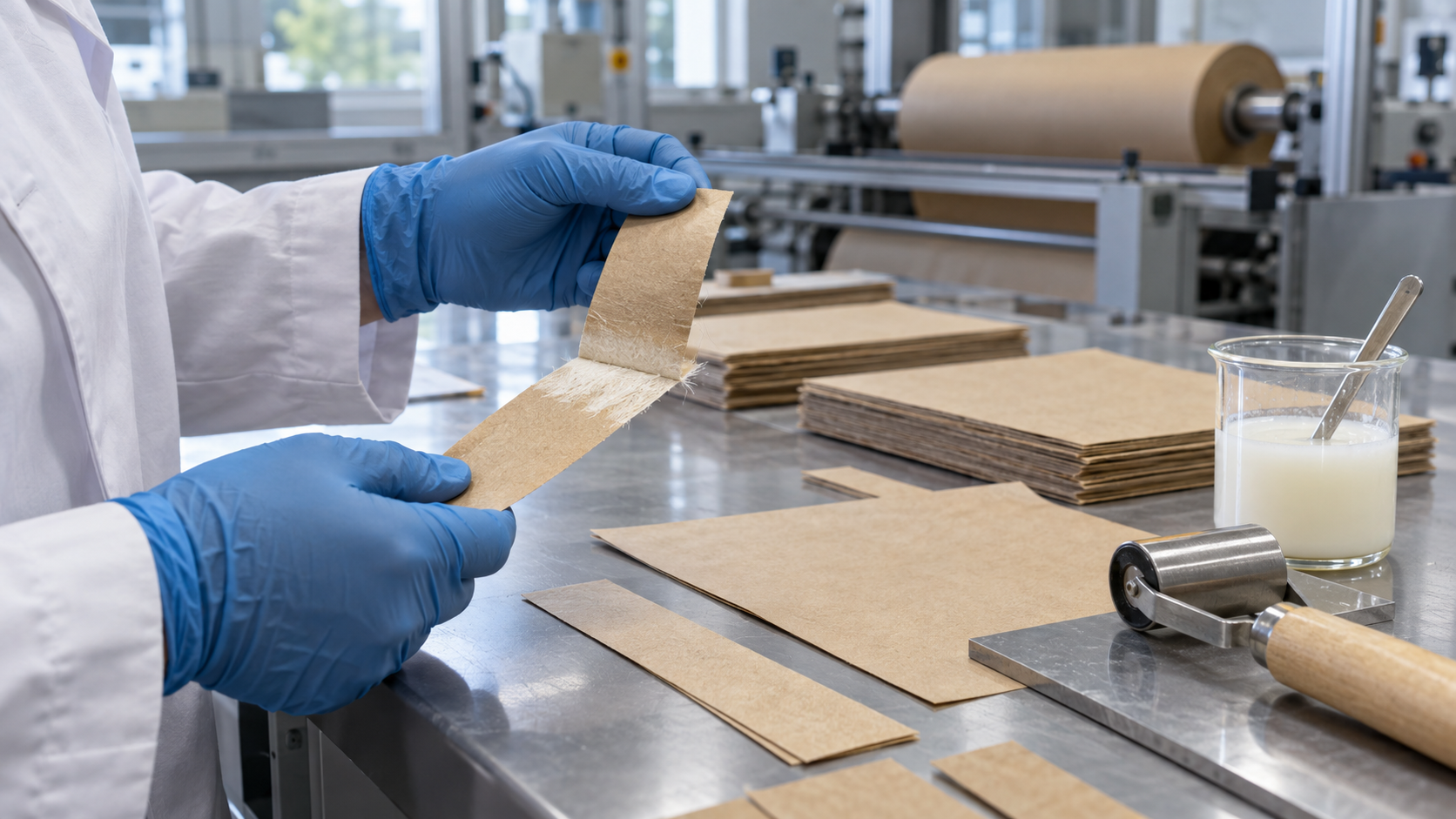
Evaluate the Complete Production Cycle
Do not judge the bond only a few minutes after assembly. Inspect it again after the moisture has had time to leave the adhesive layer and the paper has stabilized.
The finished sample should also pass through the intended downstream operations. If it will be folded, cut, bound or packed, include those steps in the trial. Check flatness, appearance, edge lifting and bond consistency across the full sheet.
Storage and shipping conditions matter as well. Paper products can gain or lose moisture when the surrounding humidity changes, so samples should be evaluated under conditions that reasonably represent the target market.
Information to Send Your Adhesive Supplier
A useful inquiry should include the paper types, grammage, application method, production speed, required handling time and expected order quantity. Photos or samples of the existing process can make the recommendation more accurate.
Contact Desay Chemical with your kraft paper and converting details to identify a suitable PVA grade for testing. Final approval should be based on trials with the actual materials and normal production settings.
Post time: Sep-21-2026