



A carton can leave a folding machine looking perfectly sealed, only for an edge to lift during packing or transport. When that happens, the adhesive is often blamed first. Yet the real cause may be the board coating, glue placement, compression time, or a change in production speed.
Choosing carton machine sealing glue is therefore a process decision, not simply a search for the strongest adhesive. The right product must bond the actual packaging material and work reliably within the time available on the line. Desay Chemical’s carton machine sealant product page describes a liquid machine-applied adhesive intended for automated box-pasting and carton-sealing work, including coated and printed materials.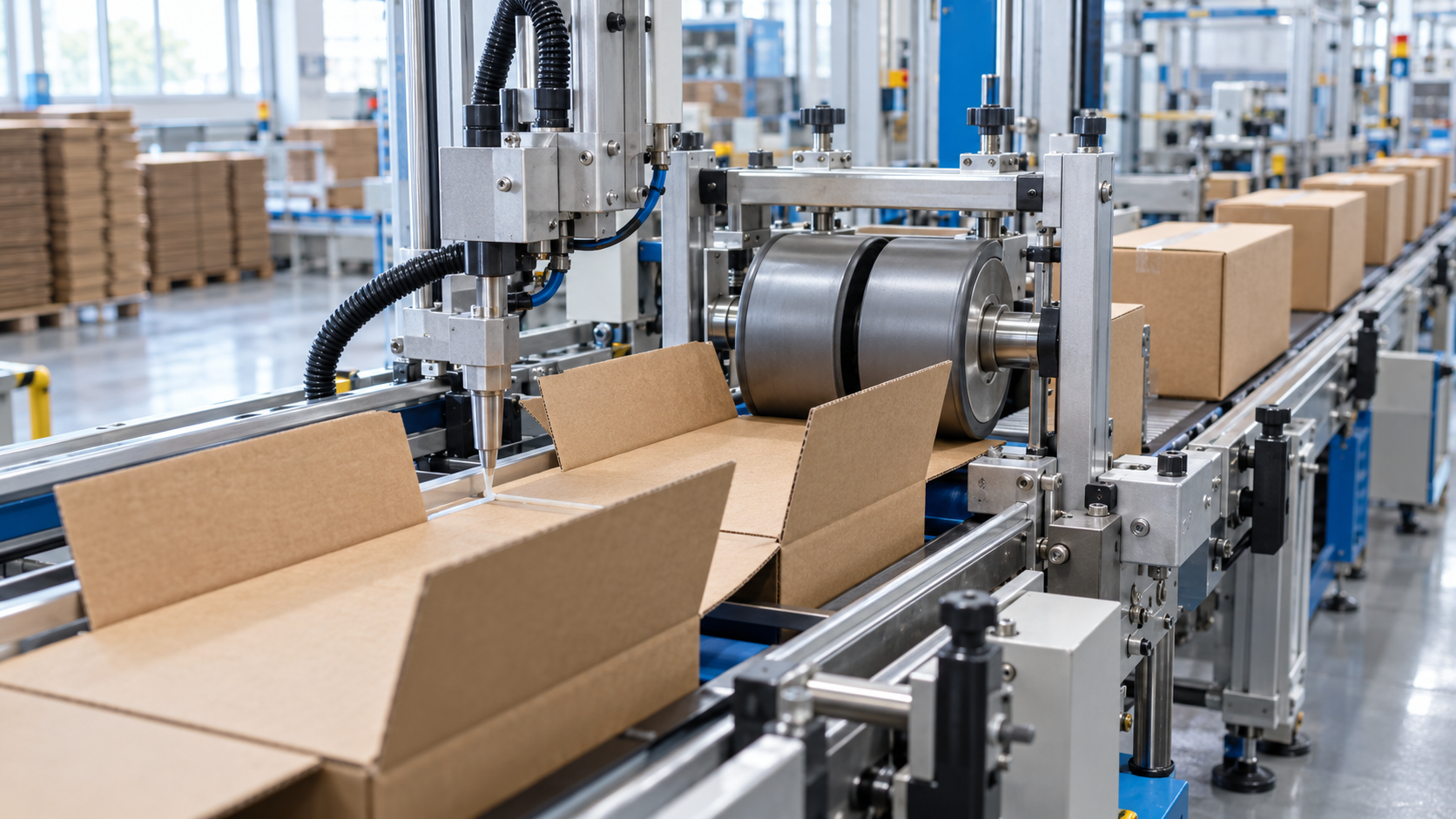
Identify Every Surface at the Bond
“Cardboard” is rarely a complete substrate description. A carton may be uncoated kraft board, printed paperboard, metallic card, or board laminated with film. Even two cartons with the same appearance may have different coatings at the glue seam.
Ask which surfaces actually meet when the box is folded. Is the adhesive bonding paper to paper, paper to a printed coating, or two low-absorbency surfaces? A glue that works on uncoated board should not automatically be assumed suitable for a glossy or film-laminated carton.
When requesting a recommendation, send samples of the finished board—not just the undecorated paper stock. Include the printed, coated, or laminated areas that will form the production bond.
Match the Adhesive to the Application Equipment
The glue must travel consistently from its container through the machine’s delivery system and onto the intended seam. Depending on the equipment, it may be applied by a wheel, nozzle, or another controlled method.
For a liquid adhesive, viscosity affects how readily the product transfers and how accurately it stays within the glue area. Too little adhesive may leave gaps; too much may squeeze out, mark the carton, or slow handling. These are reasons to test the complete application setup rather than select a product by viscosity alone.
Tell the supplier the machine model, application method, approximate line speed, and whether the equipment already handles water-based liquid glue. Do not assume that a liquid carton sealant can be substituted directly into a hot-melt system.
Consider the Time Between Gluing and Compression
An automated line gives the adhesive a limited window to wet the surface before the carton is folded and pressed. The available time changes with machine speed, glue position, carton geometry, and the length of the compression section.
A fast-setting adhesive may help prevent a flap from reopening, but setting speed must still match the process. If the adhesive loses its usable bonding window before the two surfaces meet, the seam may be weak. If the carton is released before the bond has enough handling strength, the flap may spring back.
Run trials at normal production speed—not only at a slower setup speed—and inspect cartons immediately after compression and again after an appropriate conditioning period.
Test the Finished Carton, Not Just a Glue Sample
A bench test can help screen candidates, but it cannot reproduce every condition on a working line. Use actual production cartons for a short trial, then check several points:
- Is the adhesive placed consistently along the full seam?
- Do edges lift immediately after the compression section?
- Does the seam remain intact after downstream folding and packing?
- Is there visible squeeze-out or staining?
- Does the result change when board batches or line speeds change?
Record the settings used for each trial. If a problem appears later, that record helps distinguish an adhesive issue from a change in substrate or machine setup. 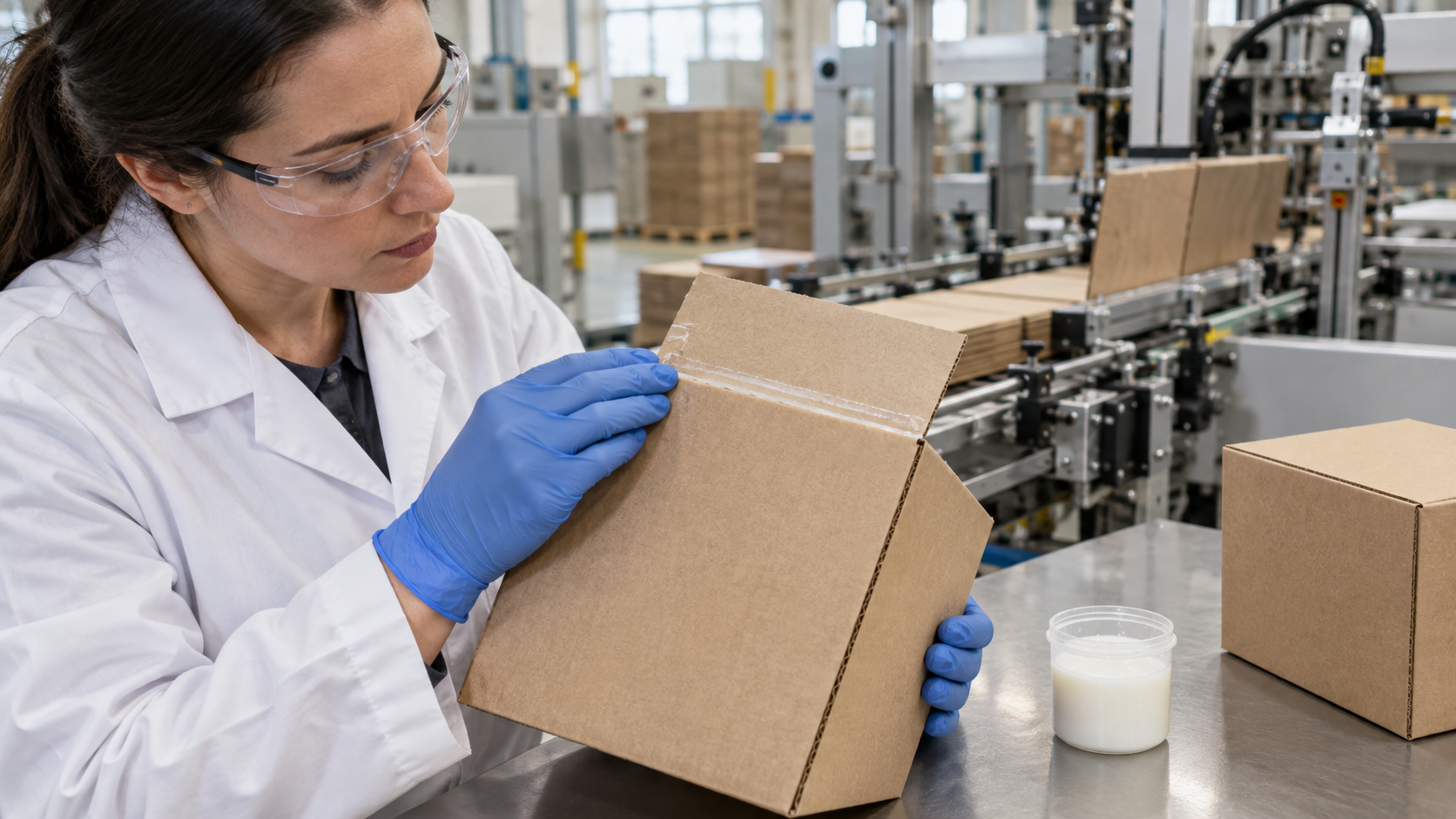
Check Storage and Production Conditions
Temperature, humidity, and board condition may influence how a liquid adhesive applies and dries. Keep containers closed according to the supplier’s instructions, and confirm the recommended storage and handling conditions in the product’s technical documentation.
The goal is not to find one glue described as suitable for every carton. It is to establish a repeatable bond on your board, your machine, and your production schedule.
For a more useful recommendation, send Desay Chemical a finished carton sample along with your substrate combination, application method, line speed, and current sealing problem. A line trial can then determine whether a proposed grade fits the job.
Post time: Sep-16-2026