



A VAE adhesive that performs consistently in one season may behave differently when production conditions change. During hot, dry weather, it may set faster than expected. In a cool or humid environment, the same adhesive may require more time to develop its initial bond.
These differences do not necessarily indicate a quality problem. Because most VAE adhesives are water-based, their performance during application depends partly on how quickly water leaves the adhesive layer. Understanding the effects of temperature and humidity can help manufacturers maintain more consistent bonding results throughout the year.
How VAE Adhesives Form a Bond
After a VAE adhesive is applied, water is removed through evaporation and absorption into the substrate. As the water leaves, the dispersed polymer particles move closer together and form a continuous adhesive film.
The rate of this process is affected by several factors, including ambient temperature, relative humidity, airflow, coating weight and substrate absorbency. Porous materials such as kraft paper, corrugated board and wood can absorb part of the water. Coated paper, plastic film and other low-porosity surfaces depend more heavily on evaporation.
For this reason, the same adhesive can show different drying behavior on different materials, even under identical production conditions.
The Effect of Temperature
Higher temperatures generally accelerate water evaporation. This can shorten drying time, improve initial setting speed and support faster production. However, excessive heat may cause the adhesive surface to dry too quickly.
If the open time becomes too short, the adhesive may begin forming a skin before the second substrate is assembled. This can reduce wetting and lead to inconsistent bonding. Rising temperature may also lower the application viscosity of some formulations, affecting coating weight, penetration or squeeze-out.
Low temperatures have the opposite effect. Water evaporates more slowly, initial bond development takes longer and bonded materials may require additional pressing or holding time. If the adhesive, substrate or surrounding air is too cold, proper film formation may also be affected.
The minimum suitable application temperature depends on the VAE grade and the complete adhesive formulation. Cold substrates should also be checked for condensation before bonding, particularly when they are moved into a warmer, humid production area.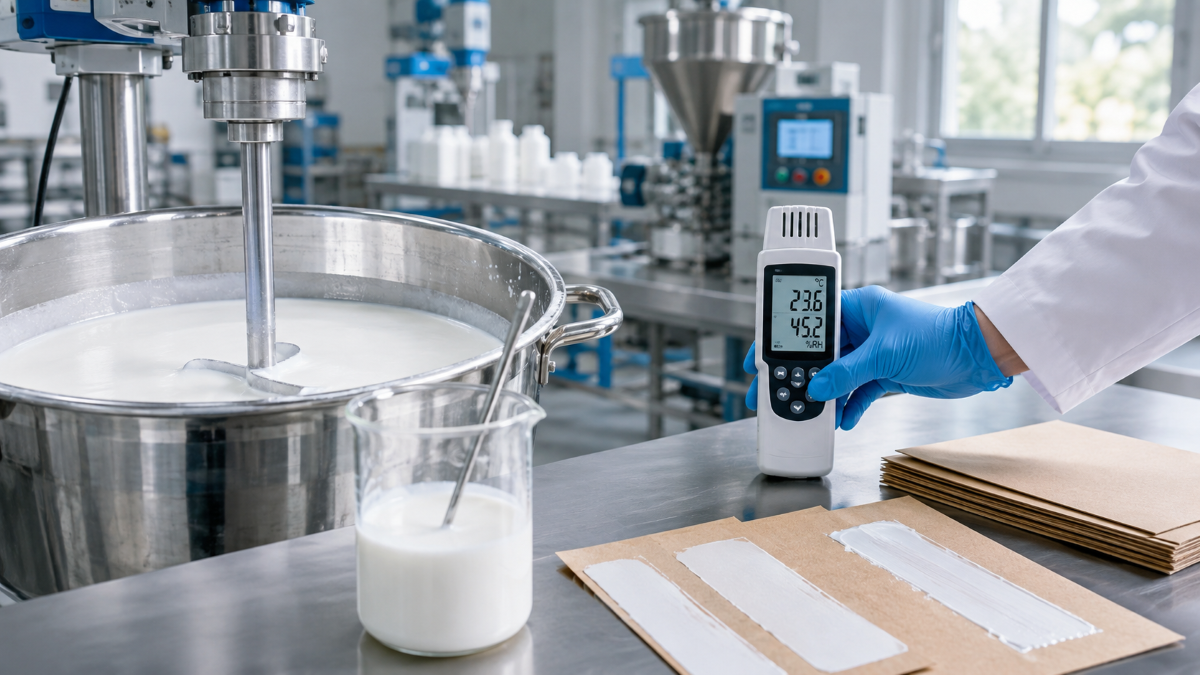
The Effect of Humidity
High relative humidity slows water evaporation because the surrounding air already contains a significant amount of moisture. The adhesive may remain wet for longer, delaying initial tack and increasing the required pressing or drying time.
This effect is often more noticeable when bonding coated or low-porosity materials. When water cannot readily enter the substrate, it must escape mainly through evaporation. High humidity can therefore become a production constraint, especially on fast-moving packaging and laminating lines.
Low humidity can speed up surface drying, but faster is not always better. The adhesive may lose open time before assembly, while very dry paper, board or wood may absorb water too rapidly. In both cases, the adhesive may not fully wet the bonding surfaces.
Temperature and humidity should therefore be considered together. High temperature combined with low humidity may produce extremely rapid drying, while low temperature and high humidity can significantly delay bond development.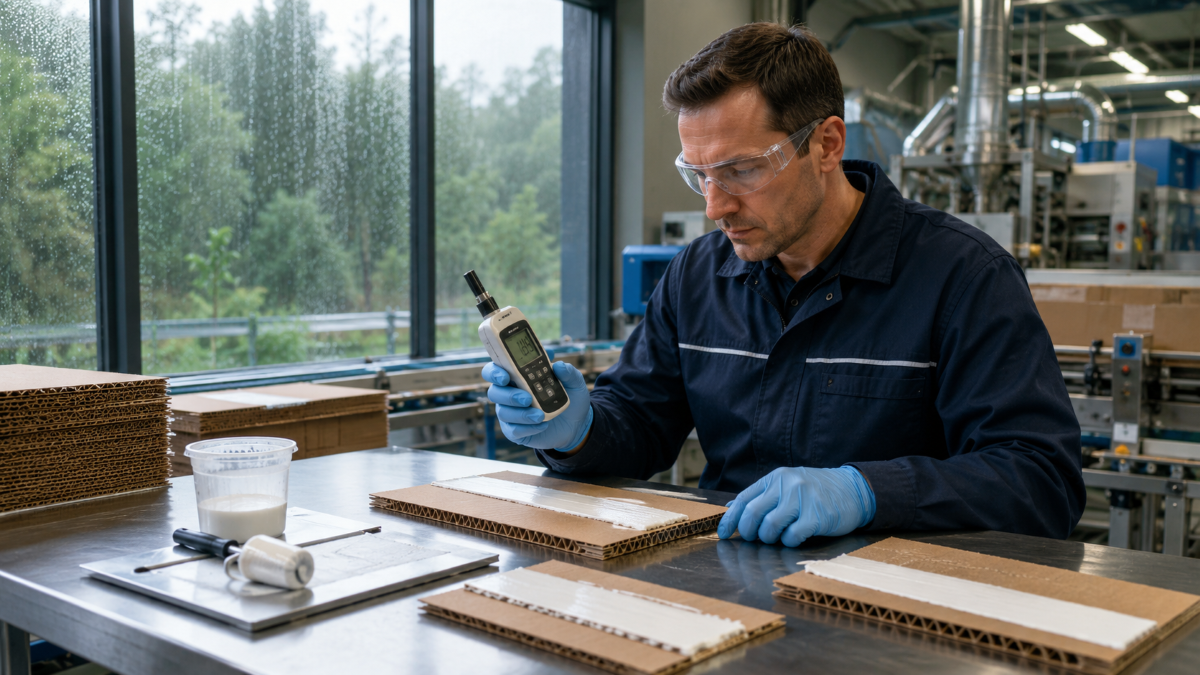
Maintaining Consistent Production
Manufacturers should monitor both room temperature and relative humidity rather than relying on seasonal assumptions. Adhesives and substrates should be allowed to reach the production-room temperature before use.
When conditions change, review the coating weight, open time, line speed, airflow and pressing time. Seasonal production records are particularly useful. Recording environmental conditions alongside the adhesive batch, substrate, machine settings and bond-test results makes it easier to identify the actual cause of performance changes.
Avoid adding water, thickeners or other additives without controlled testing. Unplanned adjustments can change solids content, viscosity, drying behavior and final bond performance.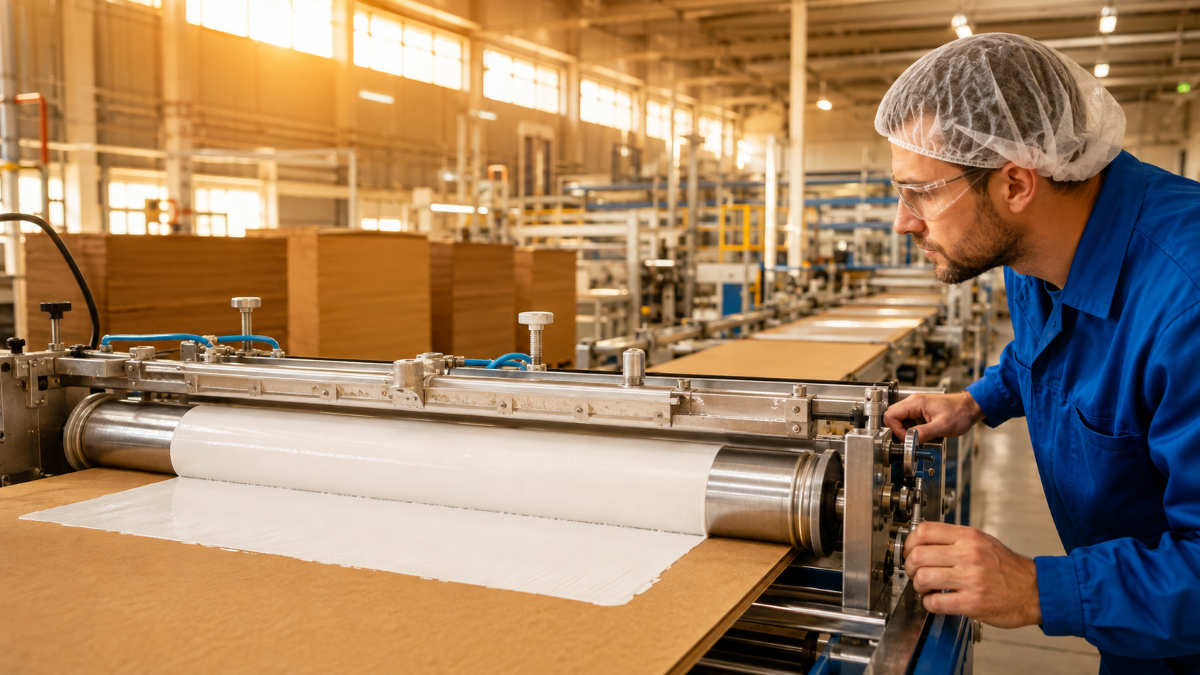
Temperature influences evaporation, application viscosity and film formation, while humidity affects water removal and substrate condition. Their combined effect can change drying time, open time and early bond development.
For reliable results, VAE adhesives should be evaluated under the customer’s actual operating conditions. Substrate type, application method, production speed and local climate should all be considered when selecting a suitable VAE emulsion grade.
Post time: Aug-24-2026