



A textile laminate has to do more than stay together. It may also need to remain soft, fold naturally, survive further converting, and look consistent across a wide roll. Those requirements make adhesive selection more involved than a simple bond-strength comparison.
Reactive polyurethane hot melt—often called PUR hot melt—is one option for textile lamination. It is applied through heated equipment, develops handling strength as it cools, and continues to cure through a moisture reaction. Bostik identifies reactive hot melts among its textile lamination adhesive technologies, while equipment manufacturer Nordson describes processing systems specifically for reactive PUR hot melts. The suitability of any particular grade still has to be established with the intended fabrics and process.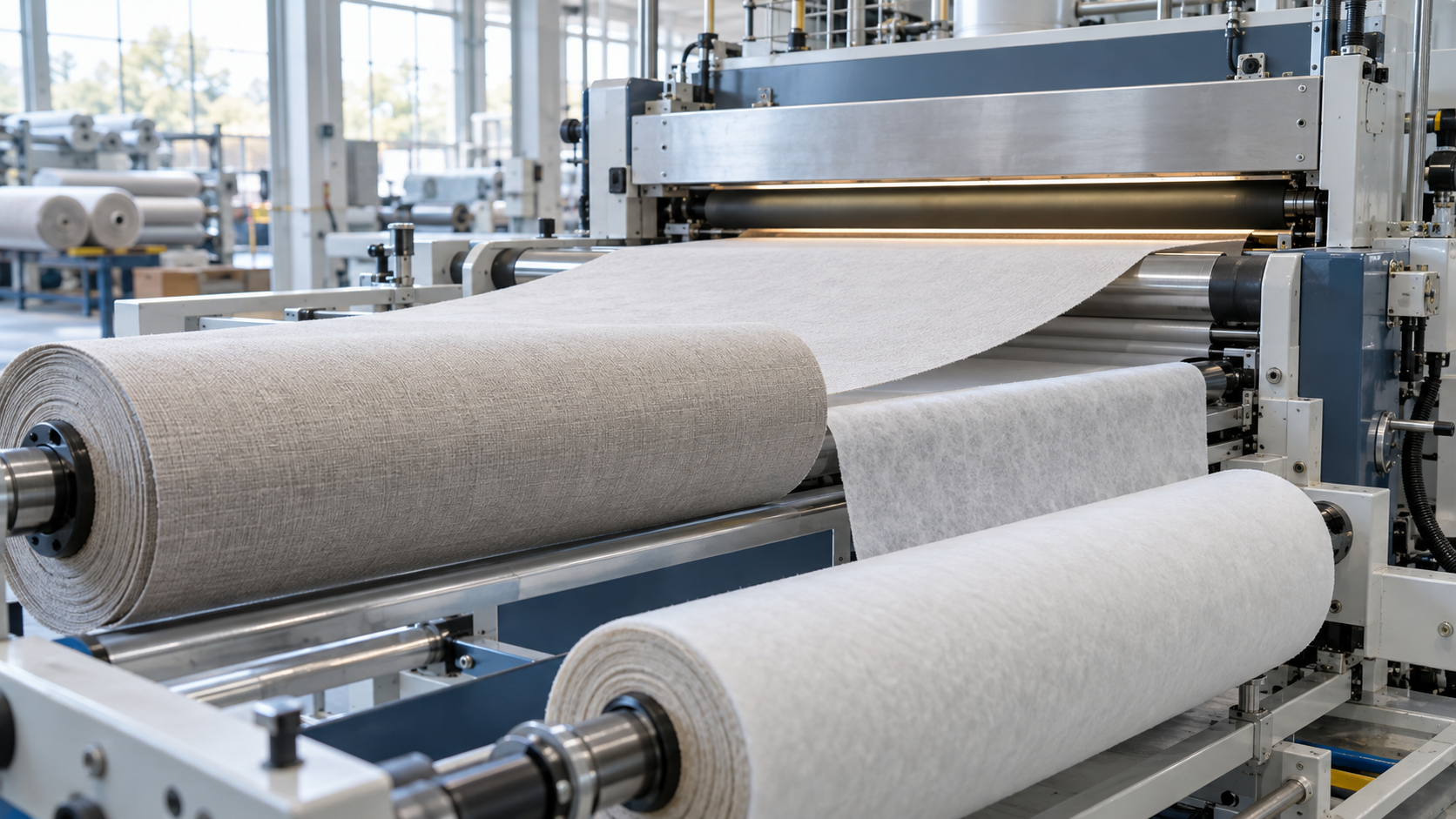
Define the Textile Construction First
Start by listing the materials in every layer. “Fabric to fabric” could mean a woven outer textile bonded to a nonwoven backing, a knit joined to a decorative layer, or a more complex construction with a film or foam between them.
Fiber content alone is not enough. Fabric weight, weave openness, stretch, surface finish, and any water-repellent treatment can all affect adhesive contact. A coating applied to the fabric before lamination may change the bond surface entirely.
Send the adhesive supplier samples from the actual production lots. If several colors or finishes will be used, include the versions most likely to behave differently.
Decide Which Qualities Must Be Preserved
A laminate that passes a peel test may still be unsuitable for its final product. Too much adhesive can make a soft textile feel stiff, show through an open weave, or create uneven appearance. Too little may leave areas with unreliable bonding.
Write down the end-use priorities before testing. For apparel or home textiles, these may include drape, hand feel, flexibility, appearance, wash performance, or resistance to repeated folding. Do not assume that a PUR adhesive automatically provides any particular level of washability or breathability; those properties belong to the tested laminate as a whole.
This distinction helps buyers compare samples by the performance that matters to the finished product, not by a single adhesive specification.
Match Open Time to the Lamination Line
Open time is the period during which the applied adhesive can still form an effective bond with the second material. On a roll-to-roll line, the distance from application point to laminating nip, line speed, and substrate temperature all affect that interval.
The adhesive also has to work with the coating method. Application weight and pattern influence coverage and fabric feel, while nip pressure helps bring the layers into contact. A laboratory sample made by hand may not predict what happens across a full-width production roll.
Share the equipment type, coating method, operating conditions, web width, and target speed with the supplier. Trial settings should follow the technical data sheet for the specific grade; there is no universal PUR application temperature or open time.
Separate Handling Strength from Final Performance
PUR hot melt may hold the layers together after cooling, but that initial handling strength is not the same as the properties of the fully cured laminate. Its subsequent moisture reaction means the timing of evaluation matters. Nordson’s overview of reactive hot-melt application distinguishes the initial cooling stage from later moisture-driven hardening.
Agree on when samples will be tested. If one supplier’s laminate is measured soon after production and another is measured after conditioning, the comparison is not meaningful. Use the same conditioning period, test method, and environment for each candidate.
Run Trials That Reflect Real Use
Test samples from the beginning, middle, and end of a production roll. Inspect bond consistency, visible marks, edge behavior, and changes in hand feel. Then carry out the relevant end-use tests on the finished laminate, using the customer’s acceptance criteria.
If the material will be cut, sewn, folded, washed, or heat-processed later, include those steps in the trial. Also confirm the adhesive’s handling, storage, and equipment-cleaning instructions before moving from samples to production.
A useful PUR evaluation ends with a clear specification: the exact substrate combination, machine settings, application weight, conditioning time, and pass criteria. Send Desay Chemical those details and your fabric samples when requesting a textile-lamination adhesive recommendation; specific model properties and performance claims should be confirmed against the selected grade’s technical data and trial results.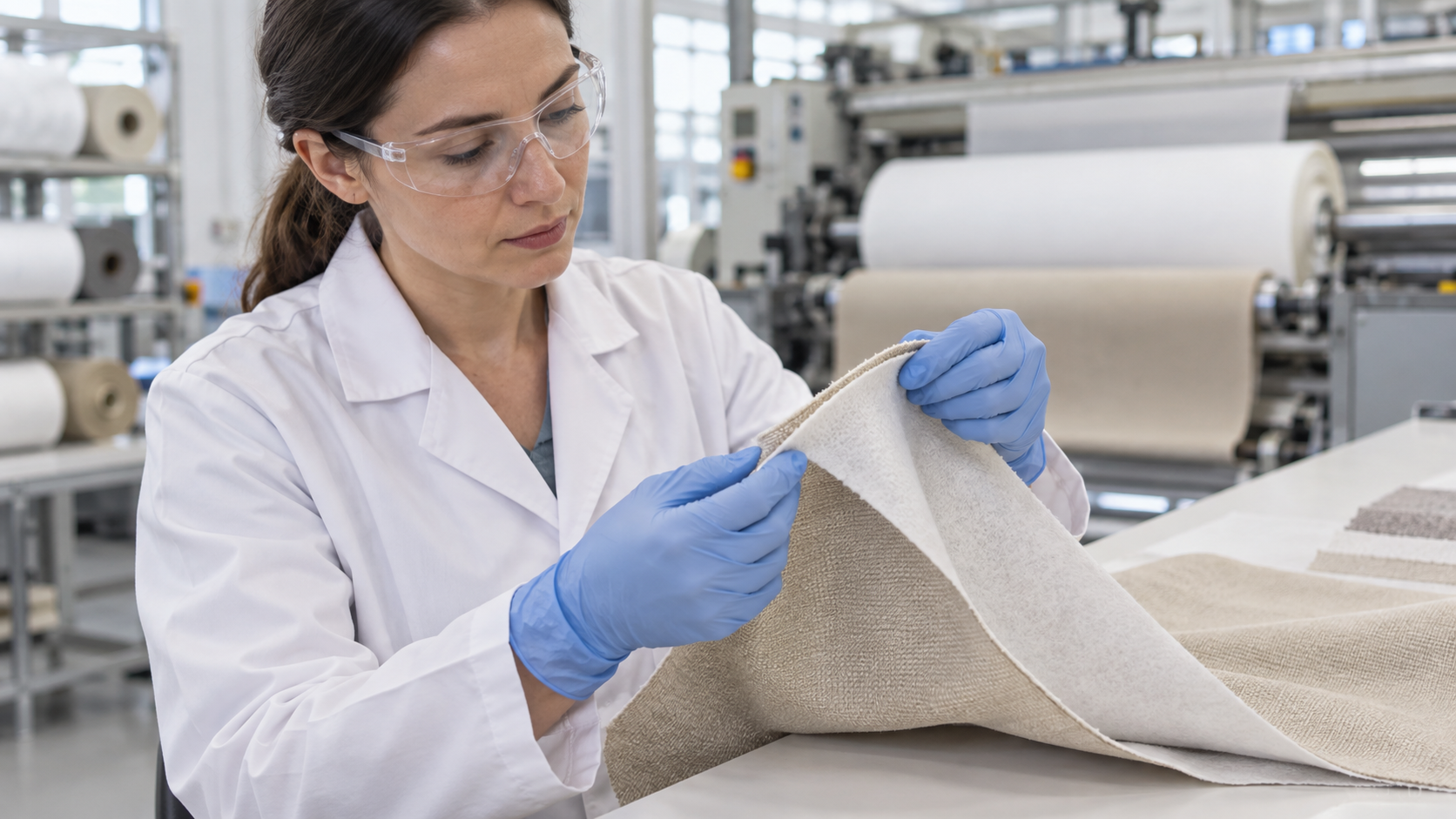
Post time: Sep-16-2026